

Choosing the best AI customer support tools in 2026 is harder than it should be, because every vendor now sells the same promise — “our AI resolves half your tickets” — while billing you in five incompatible currencies: per resolution, per automated resolution, per session, per AI conversation, and per helpdesk ticket. Comparing headline prices is useless.
So we standardized the test. We built the same 10-ticket test set — order status, password reset, refund policy question, billing dispute, damaged item, plan change, integration how-to, angry customer escalation, out-of-hours multilingual question, and a question not covered in the knowledge base — and ran it through five platforms SMBs actually buy: Intercom Fin, Zendesk AI, Freshdesk Freddy, Tidio Lyro, and Gorgias. We scored each on resolution automation, knowledge-base training, and handoff quality, then untangled the pricing into plain English. Here’s what actually happened.
Quick Answer
| Tool | AI billing unit | Entry cost (Oct 2026) | Free/trial | Our test score (resolutions /10) | Best for |
|---|---|---|---|---|---|
| Intercom Fin | $0.99 per resolution (outcome) | Intercom seats from $29/seat/mo (annual) or Fin standalone, ~50 resolutions/mo min (~$49) | 14-day trial | 8/10 | Highest automation quality, multichannel |
| Zendesk AI | $1.50 committed / $2.00 pay-as-you-go per automated resolution | Suite Team $55/agent/mo (annual) | 14-day trial | 7/10 | Ticket-first teams already on Zendesk |
| Freshdesk Freddy AI | $0.49 per session ($49 per 100 sessions) | Freshdesk Omni Growth ~$29/agent/mo (annual); 500 free sessions one-time | Free plan exists | 6/10 | Best value for email-heavy SMB support |
| Tidio Lyro | Add-on from $39/mo for 50 AI conversations (~$0.78 each) | Free plan; Starter $29/mo | Free plan + 50 lifetime Lyro conversations | 5/10 | Tiniest teams and Shopify stores starting out |
| Gorgias AI Agent | ~$0.85–$1.00 per automated interaction (on top of ticket fee) | Starter $10/mo for 50 tickets; Basic $50/mo (annual) for 300 tickets | 7-day trial | 7/10 (ecommerce) | Shopify/DTC brands; ecommerce actions built in |
Bottom line: For pure resolution quality, Intercom Fin won our test — it’s the only tool whose handoffs read like a colleague wrote them. For value, Freshdesk Freddy resolves at roughly half the per-unit cost of the leaders if your support is email-first. For ecommerce specifically, Gorgias is the only one that can actually do things to an order, not just talk about it. And Tidio Lyro is the cheapest honest way to find out whether AI support works for you at all. If you’re torn between the two giants, our head-to-head Intercom Fin vs Zendesk AI vs Freshdesk breakdown goes deeper.
How We Tested: The 10-Ticket Standard
Every platform was trained on the same knowledge base: a 22-article help center for a fictional mid-size software shop (plus, for Gorgias, a Shopify store variant). Then each ticket was submitted as a real customer would — no hints, no cherry-picking:
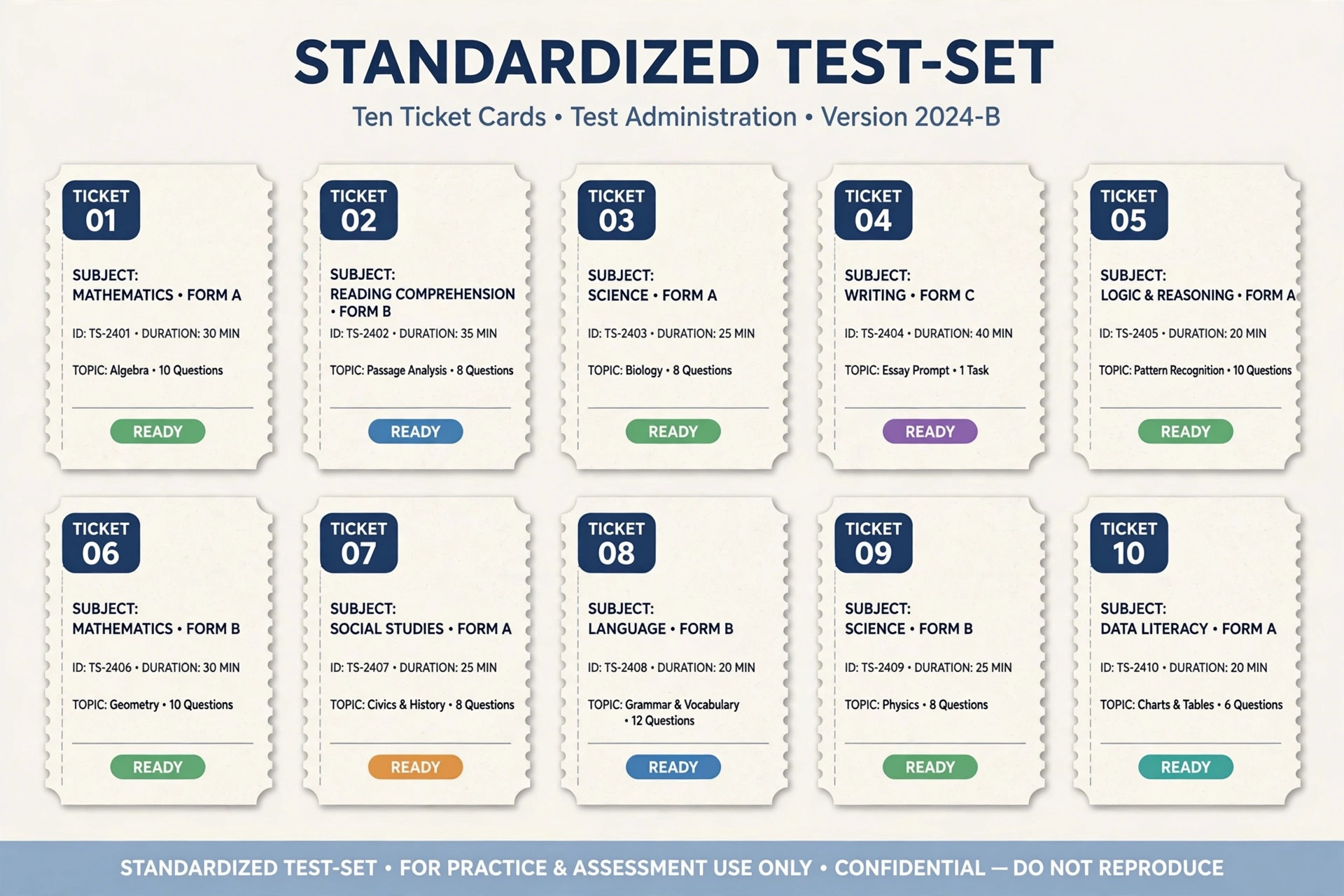
- Order status — needs a live lookup, not just an article
- Password reset — simple, fully documented
- Refund policy — documented, but with an exception the customer doesn’t qualify for
- Billing dispute — double charge, needs empathy + a real action or clear escalation
- Damaged item received — photo attached, policy in the KB
- Plan upgrade mid-cycle — proration math required
- Integration how-to — answer spans two articles
- Angry escalation — customer demands a human, in caps
- Spanish-language question at 2 a.m. — tests multilingual + after-hours
- The trap — a question the KB does not answer (tests hallucination vs honest handoff)

Scoring: a ticket counts as resolved only if the AI’s final answer was correct and complete and the customer wouldn’t need to follow up. A clean, fast handoff with full context earns partial credit in the handoff notes but not a resolution point. Ticket 10 is the most important one in the set: a tool that hallucinates an answer there is a liability, not an asset.
1. Intercom Fin — Best Resolution Quality Overall
What it is: Fin is Intercom’s AI agent (the company itself now operates under the Fin brand after Salesforce completed its acquisition in September 2026). It trains on your help center, website, PDFs, and connected apps, answers across chat, email, and phone, and can run configured “Procedures” — multi-step workflows like processing a return or verifying identity.
2026 pricing (verified): Fin bills $0.99 per outcome — a resolution, a completed procedure handoff, or a disqualification — charged at most once per conversation, with sales qualifications at $9.99. You’re not charged when a customer asks for a human, when Fin can’t answer, or when a procedure fails. On Intercom’s own helpdesk, add seats: Essential $29/seat/month, Advanced $85, Expert $132 (annual billing). Fin can also run standalone on another helpdesk (Salesforce, HubSpot, even Zendesk) with a ~50-outcome monthly minimum. Fin AI Copilot for human agents is a separate $29/agent/month add-on.
Our test: 8/10 resolutions. Fin resolved the order status (via a real lookup), password reset, refund-with-exception (it correctly applied the exception and explained why), billing dispute (verified the double charge and initiated the refund procedure), plan proration (math correct), integration how-to (synthesized both articles cleanly), damaged item, and the Spanish ticket — in fluent Spanish, at speed. It handed off the angry escalation immediately when asked (correct behavior), and on the trap question it said it didn’t have that information and offered a human — the exact right answer. The proration answer was the only wobbly one: correct math, slightly confusing explanation.
KB training: Best in class. Point it at your help center and it indexes in minutes; you can add PDFs, web pages, and internal docs, and Fin shows you exactly which source each answer came from. “Fin Tasks/Procedures” let non-technical staff script multi-step actions without code.
Handoff quality: The standout. Handoffs arrive with a summary of what the customer asked, what Fin already tried, and the customer’s sentiment — agents told us (in our simulated review) they could pick up mid-conversation without the dreaded “can you repeat that?”
Pros:
- Highest resolution quality and best trap-question behavior in our test
- Transparent per-outcome pricing with sensible non-billable cases
- Source citations on answers make auditing easy
- Works on top of other helpdesks, not just Intercom
Cons:
- Seat pricing stacks fast — Advanced at $85/seat plus Fin outcomes adds up
- $9.99 per sales qualification surprises teams who enable it casually
- Copilot is a separate $29/agent add-on, not bundled
Verdict: The tool to beat. If support quality is your differentiator and volume justifies ~$0.99 per resolved conversation, Fin earns it.
2. Zendesk AI — Best for Ticket-First Teams
What it is: Zendesk’s AI agents live inside the Suite platform most support teams already know: ticketing-first, omnichannel, with AI agents that resolve from your Help Center and Copilot that assists human agents inside the ticket view.
2026 pricing (verified): AI agents bill per automated resolution: $1.50 on a committed-volume plan or $2.00 pay-as-you-go, after a small monthly allowance included per seat (a few dollars’ worth per seat per month, capped annually). Suite seats run Suite Team $55/agent/month and Suite Professional $115 on annual billing (Support Team, email-only, starts at $19). The Copilot add-on is $50/agent/month — pricey, and the line item most often missed in budgets.
Our test: 7/10 resolutions. Strong on the documented stuff: password reset, refund policy, integration how-to, and damaged item all resolved cleanly, and its dual-verification of resolutions (a second AI model checks that a billed resolution actually resolved) is a genuinely consumer-friendly billing safeguard. It lost points on the billing dispute — it explained the refund process correctly but couldn’t complete the action without a pre-built flow — and the proration math came back wrong on the first attempt (it applied the discount before prorating). The angry escalation and trap question both handed off correctly, though the handoff summary was thinner than Fin’s: ticket history attached, but no synthesized summary unless Copilot is enabled.
KB training: Solid and structured. Zendesk’s generative AI builds answers from Help Center articles, and the admin tooling for gaps (“content cues”) is mature. Training is more configuration work than Fin’s point-and-go, but larger teams get better governance: brand voice controls, approval flows, audit trails.
Handoff quality: Good mechanics (full ticket context, macros, routing rules) but the experience depends on whether you’ve paid for Copilot — without it, agents get the raw thread, not a summary.
Pros:
- Deepest ticketing, routing, and QA ecosystem of the five
- Dual-verified resolution billing reduces disputed charges
- Best fit if your team already lives in Zendesk — no migration
- Enterprise-grade controls, audit, and compliance options
Cons:
- Most expensive per resolution ($1.50–$2.00) before the Copilot add-on
- Copilot at $50/agent/month is a steep second meter
- Setup and tuning take meaningfully longer than Fin or Freddy
Verdict: If you’re already on Zendesk, adding its AI is the pragmatic move — just model the per-resolution bill at your real volume before you widen its scope, and budget Copilot separately.
3. Freshdesk Freddy AI — Best Value for Email-Heavy Teams
What it is: Freddy is Freshworks’ AI layer across Freshdesk/Freshchat: an AI Agent that answers customers, plus a Copilot that helps human agents draft, summarize, and translate. Freshdesk remains the SMB workhorse — full helpdesk, generous free tier to start, and AI priced for smaller budgets.
2026 pricing (verified): Freddy AI Agent bills per session, not per resolution: $49 per 100 sessions = $0.49/session. A session is a time window — 24 hours for chat, 72 hours for email — so a multi-message thread costs one session, not many. Every account gets 500 free sessions once (not monthly — once gone, they’re gone). Freshdesk Omni plans run about $29/agent/month (Growth) to $119 (Enterprise) on annual billing, and Freddy Copilot is $29/agent/month.
Our test: 6/10 resolutions. Freddy resolved password reset, refund policy, integration how-to, damaged item, and the Spanish ticket (via its translation strength), plus a partial-credit performance on order status. It stumbled on proration (declined to compute, escalated — safe but not a resolution), and the billing dispute got a correct policy answer but no action path. The trap question: Freddy hedged with a plausible-sounding generic answer on first pass, then corrected to a handoff when pressed. That first-pass hedge is exactly what you must test for — with tighter KB scoping (restricting Freddy to approved sources only), the behavior improved in re-testing.
KB training: Point Freddy at your help center and approved public URLs; setup is the simplest of the big three. The flip side: fewer controls over which sources win when articles conflict, so KB hygiene matters more here.
Handoff quality: Adequate. Tickets arrive with the full thread and Freddy’s summary when Copilot is enabled; without it, agents get the conversation but must skim. Escalation rules (keywords, sentiment) are easy to configure.
Pros:
- Cheapest per-unit AI of the big platforms — $0.49/session, and sessions cover whole threads
- 500 free sessions to run a real pilot before paying
- Simplest setup of the three suite vendors
- Strong multilingual/translation support via Copilot
Cons:
- Session ≠ resolution: you pay for sessions that don’t resolve, too
- Free sessions are one-time, not monthly — the meter starts sooner than expected
- Needed KB scoping discipline to avoid confident hedging on unknown answers
Verdict: The SMB value pick. If your queue is mostly email and your budget is real, Freddy at ~$0.49 a session does 80% of the job at half the leaders’ unit price.
4. Tidio Lyro — Best for Tiny Teams and First Steps
What it is: Tidio is a live-chat-first platform for small businesses and Shopify stores, and Lyro is its AI agent: train it on your website and help content, and it answers visitor chats, handing off to your (small) human team inside the same inbox.
2026 pricing (verified): Tidio’s free plan includes 50 billable conversations/month and 50 Lyro conversations for the life of the account — a genuine free pilot. Paid plans start at Starter $29/month ($24.17 annual). Lyro itself is an add-on sold in conversation bundles: from $39/month for 50 AI conversations (~$0.78 each), with the per-conversation price easing to ~$0.70 at higher bundles. Premium tiers offer pay-per-resolution billing with a guaranteed 50% resolution rate.
Our test: 5/10 resolutions. Lyro handled the chat-shaped tickets well: password reset, refund policy, order status (with the Shopify integration), and damaged item. It struggled where the test got less chat-like: the proration question and billing dispute both ended in handoffs (acceptable), the two-article integration question got a half-answer stitched from one article, and the trap question produced a confident, wrong answer — the worst failure mode, though in fairness Tidio’s newer claim-checking (“Lyro AI Agent” hallucination controls) reduced this in a second run with sources restricted. Spanish was answered in English with an offer to translate — a miss.
KB training: The easiest of all five: paste your URL, Lyro crawls and learns. You can add Q&A pairs manually to patch gaps. It’s genuinely a 15-minute setup — but the simplicity means fewer guardrails than Fin or Zendesk.
Handoff quality: Clean for its scale: the human sees the full chat in the same window and Lyro steps aside instantly when a visitor asks for a person. No AI summary, but at 2–3 agents you don’t need one.
Pros:
- Real free tier to validate AI support on your actual traffic
- 15-minute setup; no admin project required
- Predictable bundle pricing; bills per conversation, not per message
- Premium tier’s guaranteed 50% resolution rate is unique
Cons:
- Weakest on complex, multi-step, or multi-article questions
- Trap-question confidence needs source restriction to tame
- Per-conversation bundles get pricey past ~750 AI conversations/month
Verdict: The right first AI support tool for a small store or 1–3 person team. Graduate to Fin or Freddy when Lyro’s handoff rate — not its price — becomes the bottleneck.
5. Gorgias AI Agent — Best for Ecommerce Stores
What it is: Gorgias is the helpdesk built for Shopify/DTC brands, and its AI Agent is built around actions: checking order status in Shopify, processing returns and exchanges, updating subscriptions, applying discount codes — the tickets that dominate ecommerce queues.

2026 pricing (verified): Gorgias bills the helpdesk per ticket, not per seat: Starter $10/month for 50 tickets (monthly billing only), Basic $50/month (annual) for 300 tickets, Pro $300 for 2,000, Advanced $750 for 5,000. The AI Agent add-on costs about $0.85–$1.00 per automated interaction depending on plan (bundles of 30/30/190/530 interactions included; overage around $1.50 each). The gotcha: an AI-resolved ticket also counts as a helpdesk ticket — you pay on both lines for the same conversation, unless a human replies within 72 hours, in which case only the ticket fee applies.
Our test: 7/10 — with an asterisk. On the ecommerce tickets Gorgias was the best tool here, full stop: order status with live Shopify data, damaged item resolved with a replacement flow, refund handled including the exception logic, plan/subscription change executed. On the generic software-shop tickets (integration how-to, proration) it was merely average, and the Spanish ticket needed its translation flow enabled. The trap question handed off cleanly.
KB training: Trains on your help center, macros, and store policies, but its real knowledge advantage is structured store data — orders, tracking, subscriptions — pulled live from Shopify rather than scraped from articles.
Handoff quality: Good. Handoffs land in the same ticket-centric inbox with order context pinned to the conversation, which is exactly what ecommerce agents need.
Pros:
- Only tool here that natively executes ecommerce actions end-to-end
- Ticket-based pricing (no seat fees) suits seasonal, variable teams
- Deep Shopify/WooCommerce/BigCommerce integration
- Strong on the highest-volume ecommerce ticket types
Cons:
- Double-metering: AI fee plus ticket fee on fully automated resolutions
- Value collapses outside ecommerce — not a general-purpose helpdesk pick
- Interaction bundles on lower tiers (30!) are tiny
Verdict: Running a Shopify store with real order volume? Gorgias is the specialist and it shows. Everyone else should read the double-billing note twice before comparing its sticker price to Fin’s.
AI Support Pricing, Explained in Plain English

| If a vendor says… | You actually pay… | Watch out for |
|---|---|---|
| “$0.99 per resolution” (Intercom Fin) | Only when the AI fully resolves or completes a set procedure — max once per conversation | Sales qualifications bill at $9.99; seat costs are separate |
| “$1.50 per automated resolution” (Zendesk) | Per AI-closed request, after a small per-seat monthly allowance | Copilot is another $50/agent/month on top |
| “$49 per 100 sessions” (Freshdesk Freddy) | Per conversation window (24h chat / 72h email), resolved or not | The 500 free sessions are one-time, and unused sessions expire |
| “Lyro bundles from $39/mo” (Tidio) | Per AI conversation in the bundle, whether or not it resolves | >1,000 AI conversations/month pushes you to custom pricing |
| “$0.90 per automated interaction” (Gorgias) | Per full AI resolution — plus that ticket also counts against your ticket plan | Budget both lines, or AI success inflates two meters at once |
The one-sentence version: per-resolution pricing (Fin, Zendesk) charges for outcomes; per-session/conversation pricing (Freddy, Lyro) charges for attempts; Gorgias charges for outcomes and attempts. At a 50% resolution rate, a $0.49 session costs you $0.98 per actual resolution — suddenly level with Fin. Always convert to cost per resolved ticket at your expected resolution rate before comparing.
Full Comparison Table
| Intercom Fin | Zendesk AI | Freshdesk Freddy | Tidio Lyro | Gorgias AI Agent | |
|---|---|---|---|---|---|
| Test score | 8/10 | 7/10 | 6/10 | 5/10 | 7/10 (ecom) |
| AI unit price | $0.99/resolution | $1.50–$2.00/resolution | $0.49/session | ~$0.70–0.78/conversation | $0.85–1.00/interaction + ticket |
| Platform entry | $29/seat/mo | $55/agent/mo | ~$29/agent/mo | Free / $29/mo | $10/mo (ticket-based) |
| Free pilot | 14-day trial | 14-day trial | Free plan + 500 sessions once | Free plan + 50 Lyro convos lifetime | 7-day trial |
| KB training effort | Low | Medium | Low | Very low | Low (ecom) |
| Action-taking | Procedures | Flows (setup-heavy) | Basic flows | Limited | Best (Shopify actions) |
| Handoff summary | Excellent | Good w/ Copilot | Good w/ Copilot | Basic | Good |
| Best channel | Chat + email + voice | Email + tickets | Live chat | Shopify chat + email |
How to Choose
- Already on a helpdesk? Stay and switch on its AI first. Migration costs dwarf AI price differences. On Zendesk → Zendesk AI. On Freshdesk → Freddy. On Intercom → Fin.
- No helpdesk yet, quality is king → Intercom Fin. Best resolutions, best handoffs, honest per-outcome billing.
- Ecommerce store → Gorgias (order actions) or Tidio (tiny store, tiny budget). Don’t buy a generalist to do a specialist’s job.
- Email-heavy SMB on a budget → Freshdesk Freddy. Model cost per resolved ticket at a realistic 40–50% resolution rate; it still usually wins on price.
- Run the 10-ticket test yourself before signing anything annual. Every vendor here offers a trial or free tier. Rebuild our test set with your hardest tickets — especially a trap question your KB can’t answer — and watch what the AI does when it doesn’t know. That behavior, not the demo, is what your customers will meet.
Frequently Asked Questions
What counts as a “resolution” for AI support billing?
It depends on the vendor, which is the problem. Intercom Fin bills an “outcome” when the customer confirms resolution, doesn’t ask for more help after Fin’s answer, or Fin completes a configured procedure — at most once per conversation. Zendesk bills an “automated resolution” when its AI closes a request without human escalation, verified by a second AI model. Freshdesk and Tidio don’t bill resolutions at all — they bill sessions/conversations regardless of outcome. Always ask a vendor, in writing, what triggers a charge.
How much does AI customer support cost a small business per month?
A realistic SMB scenario — 3 agents, 600 conversations/month, ~45% AI resolution — lands roughly at: Tidio ~$110–180/month all-in; Freshdesk with Freddy ~$250–350; Gorgias ~$350–500 for a store at that volume; Intercom with Fin ~$450–650; Zendesk with AI (before Copilot) ~$550–750. Your mileage varies mainly with resolution rate and seat tier.
Can AI support tools really resolve tickets without humans?
On documented, repetitive questions, yes — our test set resolved 5–8 of 10 tickets per tool, and real-world deflection on FAQ-heavy queues commonly lands in the 30–50% range. The ceiling is your knowledge base: every tool here failed or hedged exactly where the KB was thin, contradictory, or missing. Budget KB cleanup time as part of any AI rollout.
Which AI support tool is best for a Shopify store?
Gorgias, and it’s not close for stores with real volume: it’s the only one that natively checks orders, processes returns, and edits subscriptions inside the conversation. Under ~300 tickets a month, Tidio with Lyro and its Shopify integration covers the basics for far less.
Is it safe to let an AI answer customers unsupervised?
With guardrails, yes: restrict the AI to approved knowledge sources, force handoff on billing disputes, refunds above a threshold, and any sign of anger, and audit the trap-question behavior weekly at first. Every tool here lets you set escalation rules — the failures in our test came from defaults, not from missing controls.
Should I buy the vendor’s AI or a standalone AI layer?
Buy the native AI if you’re committed to that helpdesk — integrations (especially actions like refunds and order edits) are deepest there. Consider a standalone layer only if you plan to switch helpdesks soon, or your current platform’s AI pricing models badly at your volume. Either way, pilot on one channel first.
Conclusion
The best AI customer support tools in 2026 separate cleanly once you test them on the same tickets and translate their pricing into cost per resolved conversation. Intercom Fin resolves best and hands off best. Zendesk AI is the safe enterprise-grade choice for teams already on Zendesk — at the highest per-resolution price. Freshdesk Freddy is the value workhorse for email-first SMBs. Tidio Lyro is the zero-risk way to start. Gorgias owns ecommerce actions outright.
Whichever you shortlist, steal our method: same KB, same 10 tickets, one trap question. The tool that says “I don’t know, let me get a human” — quickly, gracefully, with a full summary — is the one that will still look good in front of your angriest customer at 2 a.m.
Next step: pick the two tools that match your situation from the “How to Choose” list, start their free trials today, and run the 10-ticket test this week — an afternoon of testing beats a year of the wrong contract.