The verdict is simple. If you need market research you can defend, use Perplexity for market research as your first pass, not your final answer. It is fast at gathering current prices, competitor moves, customer complaints, and published market figures, and its citations give you a trail back to the original source. It is not a substitute for reading that source, checking the date, or testing a claim against a second independent source. Used that way, with a fixed workflow and a written brief, it turns a task that used to take a full day of tab hopping into a focused session of about ninety minutes, and it leaves you with notes a colleague can audit.
That distinction matters because most disappointing AI research has the same cause. Someone asks one broad question, copies the first answer, and presents it as fact. A market described in one paragraph was never researched in one paragraph. It was assembled from filings, pricing pages, reviews, news reports, and analyst estimates, each with its own date, bias, and limits. This guide gives you a repeatable way to do that assembly with Perplexity doing the gathering and you doing the judging. You will learn how to frame a research question, run seven distinct passes, check every load bearing claim, and turn the result into a brief that states what is known, what is uncertain, and what still needs a human decision.
Why Perplexity Fits Market Research, and Where It Falls Short
Perplexity is an answer engine, not a traditional search engine. You ask a question in plain language and it returns a written answer built from live web sources with citations. For market research, that has three practical advantages. First, it is current. A question about a price change, a launch, or a new regulation can surface pages published this week, which matters where a pricing page from last year is worse than no page at all. Second, it compresses the first hour of research. Instead of opening twenty tabs to learn the shape of a market, you get an overview and can spend your time on the five sources that matter. Third, citations change the habit of the researcher.
When every claim carries a source, it is easier to spot which claims rest on a press release, which rest on an independent report, and which rest on another blog repeating the same number.
Those advantages come with limits you should respect from the start. Perplexity can repeat a wrong number confidently if several weak sources repeat it. It can blend a 2023 figure with a 2025 figure without flagging the gap. It can summarise a paywalled report it has not truly read, based on a summary page or a press release about the report. It can also miss what is not published. Private pricing, churn rates, unit sales for a private company, and the real reason customers leave are rarely stated plainly on a public page, and no prompt will force them into existence.
A good researcher treats a Perplexity answer as a map of what is published, not as a measurement of the market itself.
Depth is the other limit. A single answer flattens a complex market, while real markets are messy, with sources disagreeing on size because they define the market differently. Preserve that mess where it matters, rather than smoothing it away for a clean slide.
How to Use Perplexity for Market Research in Seven Passes
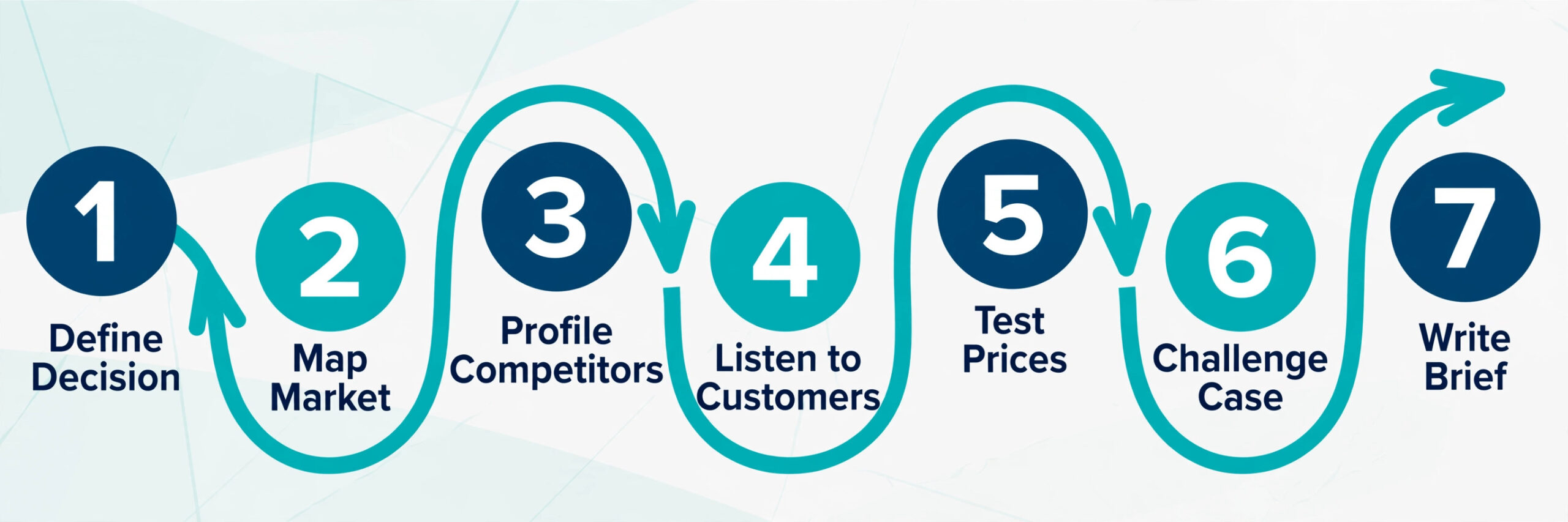
The core of this guide is a seven pass workflow. Each pass has one job, one output, and a stopping rule. Run the passes in order, and do not skip ahead to a verdict until pass six. That discipline is what separates a research brief from a copied answer. A pass should take ten to twenty minutes for a small decision, such as choosing a niche or pricing a service, and up to an hour per pass for a larger decision, such as entering a new market. Keep a single document open throughout, and paste the source link beside every fact you keep.
If a fact has no source link in your notes, treat it as unproven, no matter how plausible it sounds.

Pass One. Define the Decision Before You Search
Every session should start with one sentence that states the decision the research must support. Write it at the top of your document in this form. We need to decide a specific action, by a specific date, using evidence about a specific market. A vague decision produces vague research. A decision such as deciding whether to launch a bookkeeping service for dentists in Texas before the end of the year will focus every later pass. A decision such as learning about the dental market will not, because there is no test for when you have learned enough.
Under the decision sentence, list three things. First, the options on the table, including the option to wait or to stay out, which deserves the same evidence as going in. Second, the facts that would change your mind. If no fact could change your mind, you do not need research, you need a decision. Third, the constraints that already bind you, such as budget, time, skills, licences, and geography. Naming them early prevents a week spent researching a market you cannot serve. Also set the scope by naming the customer, the problem, the product type, and the geography.
Pass Two. Map the Market Shape
Pass two answers a basic question. What does this market look like from above. Ask Perplexity for market size, growth rate, main segments, and the leading players, and insist on dates and sources for each figure. Run the same question twice with different wording, once for market size and once for the segments, because a single prompt tends to return the most repeated figures rather than the most careful ones. Record the figures in a small table in your notes, with the source, the date, and the definition of the market used by that source beside each number.
Expect disagreement, and treat it as information. If one source puts a market at 4 billion dollars and another puts it at 9 billion dollars, the gap usually comes from different definitions. One may count software only, while the other counts software plus services. Note the definition beside the number, and carry forward a range rather than a single point estimate. A range with a reason is more honest than a precise number built on a hidden assumption. End pass two with a one paragraph market sketch in your own words.
Pass Three. Profile the Competitors That Matter
Pass three narrows from the market to the players. List no more than eight competitors, ranked by relevance to your decision, not by fame. A small direct rival that serves your exact customer is more important than a famous company that serves a different segment. For each competitor, gather the same set of facts. What they sell, who they sell it to, their headline price, their main strengths as stated by customers, their most repeated complaints, and their most recent visible move, such as a launch, a price change, a hire, or an acquisition.
Verify prices on the competitor own pricing page. Pricing pages change, and an AI summary can lag behind a change by weeks. The same caution applies to feature lists, since a feature announced in a blog post may still be in beta or limited to a higher tier. When a claim matters to your decision, open the source and read the surrounding page, not just the quoted sentence. Also label the origin of each strength. A strength from a marketing page should be marked as claimed. A strength repeated in reviews should be marked as observed. The gap between those two descriptions is often where opportunity lives.
Pass Four. Listen to Customers in Their Own Words
Pass four is the pass most researchers skip, and it is often the most valuable. Markets are made of buyers, and buyers leave a trail in reviews, questions, and discussions. Ask Perplexity to surface common questions, complaints, and praise for the product type you are studying, then follow the citations to the original threads. Read at least ten original reviews or posts yourself. Ten is a small number, but ten real voices will correct more assumptions than a polished summary of a thousand.
Look for four patterns as you read. First, the job the buyer hired the product to do, in their own terms. Second, the moment of frustration that made them switch. Third, the trade off they accepted, such as paying more for reliability. Fourth, the words they use for price. A buyer who says a tool is expensive means something different from a buyer who says it is not worth it, and that difference should shape your pricing. Keep short quotes in your notes with a source link. This pass also protects you from researching the product instead of the problem. A buyer does not wake up wanting your category.
They wake up with a late invoice or a compliance worry, and notes written in those terms make positioning and pricing easier.
Pass Five. Test Prices, Costs, and Willingness to Pay
Pass five turns attention to money. Gather headline prices for the main competitors, note what each tier includes and excludes, and note any add on fees, seat minimums, setup fees, or annual billing discounts that change the real cost. A price that looks low on a headline page can become expensive once seats, add ons, and support tiers are added, and a price that looks high can become reasonable once it replaces two other tools. Build a simple comparison in your notes that shows the total monthly cost for a realistic team size, not just the advertised starting price.
Then test willingness to pay from the demand side. Search for what buyers say they pay, what they complain about paying for, and what cheaper alternatives they mention when they leave a product. A competitor that loses customers to a free tool has a different pricing problem from one that loses customers to a premium rival. If you are pricing your own offer, end this pass with a price range you can defend, plus the evidence for each end of the range. Mark thin evidence as weak, such as a claim based on one survey with an unknown sample.
Pass Six. Challenge the Case You Want to Believe
Pass six is a deliberate argument against your preferred option. Ask Perplexity for the strongest case against entering the market, against your chosen price, or against your planned positioning, and ask specifically for evidence that contradicts your early findings. Then ask for the risks, the failed entrants, and the reasons similar products have closed or pivoted. This pass feels uncomfortable, and that is the point. Research that only confirms an early hunch is not research. It is a search for permission.
Failed entrants deserve a paragraph of their own. Find two or three products or companies that tried something similar and did not survive, and note what went wrong in plain terms. Was the market too small, was acquisition too expensive, was the product too hard to support, or did a platform change remove their distribution. Those failure modes are a checklist for your own plan. If your plan has no answer to the failure mode that killed the last entrant, your plan is incomplete. End pass six with the top five risks, the evidence for each, and the test that would reduce it. A risk without a test is just worry. A risk with a test becomes a work item.
Pass Seven. Write the Brief and Name the Next Action
Pass seven turns notes into a decision document. A research brief is not a dump of everything you found. It is a short document that a busy reader can act on. It states the decision, the recommendation, the evidence, the uncertainty, and the next action, in that order. If the brief is longer than four pages for a small decision, it has kept too much. End with one next action and one owner. A brief that ends with a concrete test, such as calling ten prospective buyers this week, moves the decision forward.
The Source Checking Workflow That Makes the Output Usable
A Perplexity answer is only as good as the check you run on it. Run this routine on every claim that will appear in a brief, a pitch, or a pricing decision. Skip it for background colour, but never skip it for a load bearing number, a competitor price, or a claim about what customers want. The routine takes about fifteen minutes for a short brief, and it is the difference between research you can quote and research you must hedge until someone asks a follow up question. This routine is what makes it safe to use Perplexity for market research for decisions that matter.
Step One. Sort Claims by Consequence
For each pile one claim, write the claim, the source Perplexity cited, and the date of that source in one line. If Perplexity cited a secondary source, such as a blog summarising a report, note that fact, and go one step further for pile one claims. Your brief should cite the strongest source you actually read, not the first source an answer engine listed.
Step Two. Open the Source and Read Around the Quote
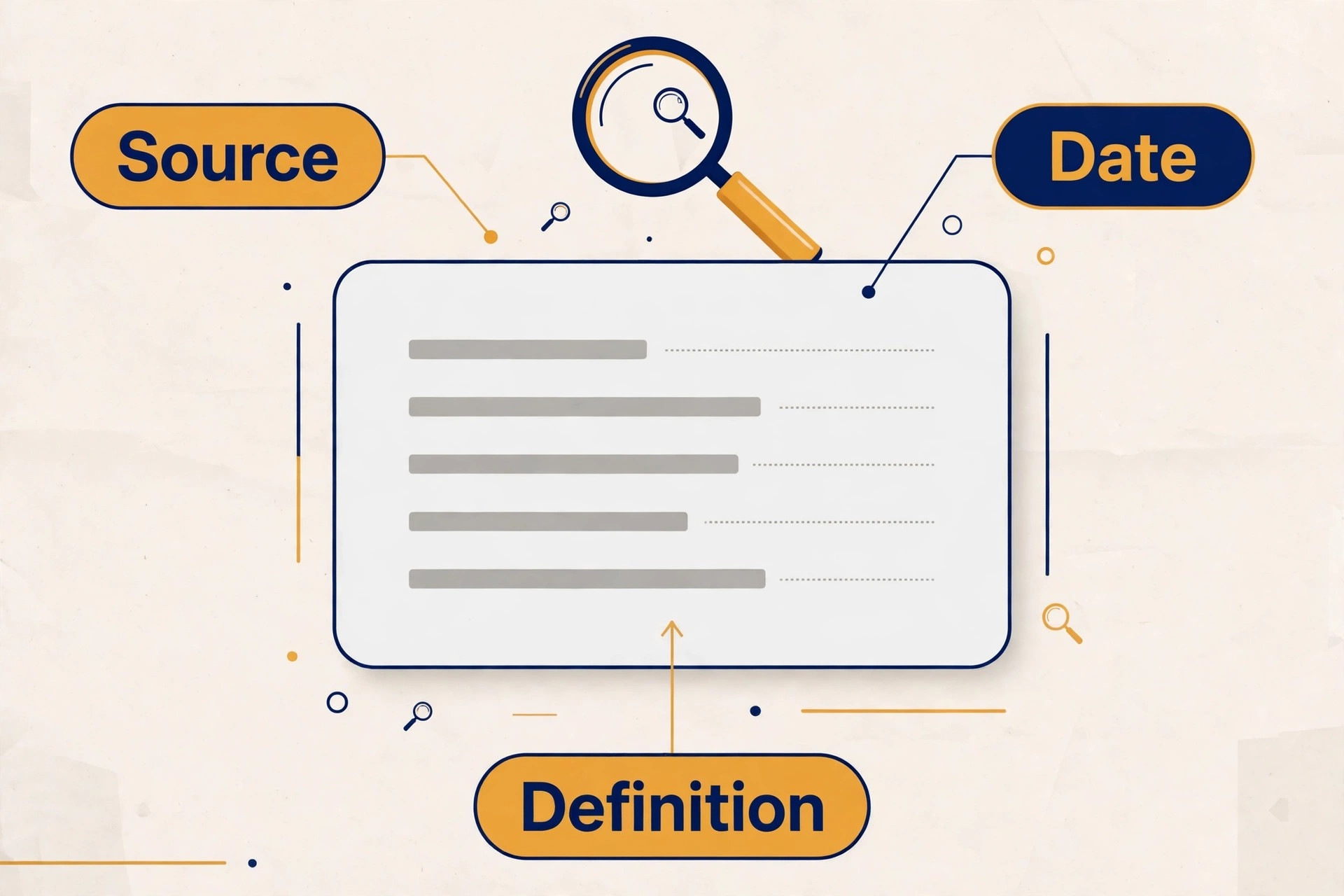
Open each pile one source and read the paragraph around the quoted figure, plus the page heading and date. Ask four questions as you read. Does the page actually say what the summary said it said. Is the figure current, or is the page old and the figure older. Does the figure measure what you think it measures, or does it use a different definition, geography, or customer group. Is the source independent, or is it the company itself, a vendor with a product to sell, or a content farm repeating another page. A figure that survives those four questions is ready for your brief.
A figure that fails any one of them needs a replacement source or a clear warning in your notes.
Watch for three warning signs. The first is a round number with no method, such as a market said to be worth exactly 10 billion dollars with no explanation of how that total was built. Round numbers are often estimates repeated until they look like facts. The second is a statistic quoted without a year. A growth rate or a price from an undated page cannot be trusted for a current decision. The third is a claim that appears on many pages with identical wording. Identical wording usually means one original page copied many times, not many independent confirmations. Count it once, and find the original if you can.
Step Three. Find a Second Independent Source
For every pile one claim, find one second source that does not depend on the first. A company press release and a news article that quotes that same press release are not two sources. They are one source told twice. A filing, an official statistics release, a pricing page, and a review site are independent in a way that matters, because they were produced by different parties for different reasons. When the second source agrees, your confidence rises. When it disagrees, you have learned something valuable, which is the range of honest disagreement, and you should report that range rather than picking the number you prefer.
There are times when a second source cannot be found. A niche market may have only one published estimate, or a private company may publish only one price list. In that case, say so in your brief. Write that the figure rests on a single source, name the source, and state what would make you more confident, such as a second report or a test campaign. Honesty about a thin evidence base is a strength. It tells the reader where to be cautious, and it protects you when the figure later moves.
Step Four. Record the Verdict on Each Claim
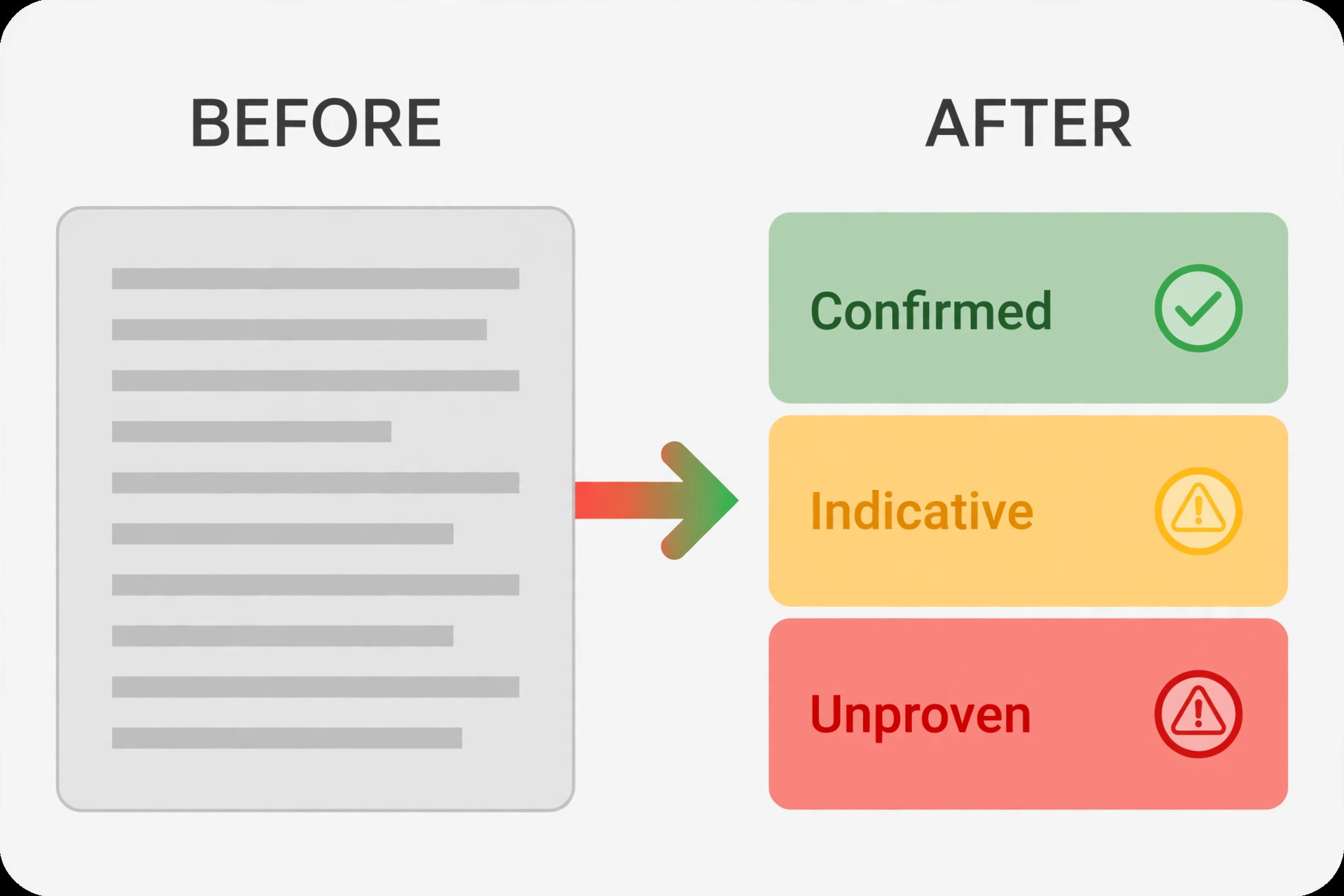
End the check with a short verdict line for each pile one claim. Use three grades only. Confirmed means two independent sources agree and you read both. Indicative means one credible source supports it, or two sources disagree within a range you can state. Unproven means the claim rests on a weak, old, or single secondary source, or you could not open the source at all. Copy those verdict lines into your brief. A reader who sees confirmed beside market size and indicative beside willingness to pay knows where the brief is solid and where a test is still needed.
The Research Brief Template You Can Reuse Every Time
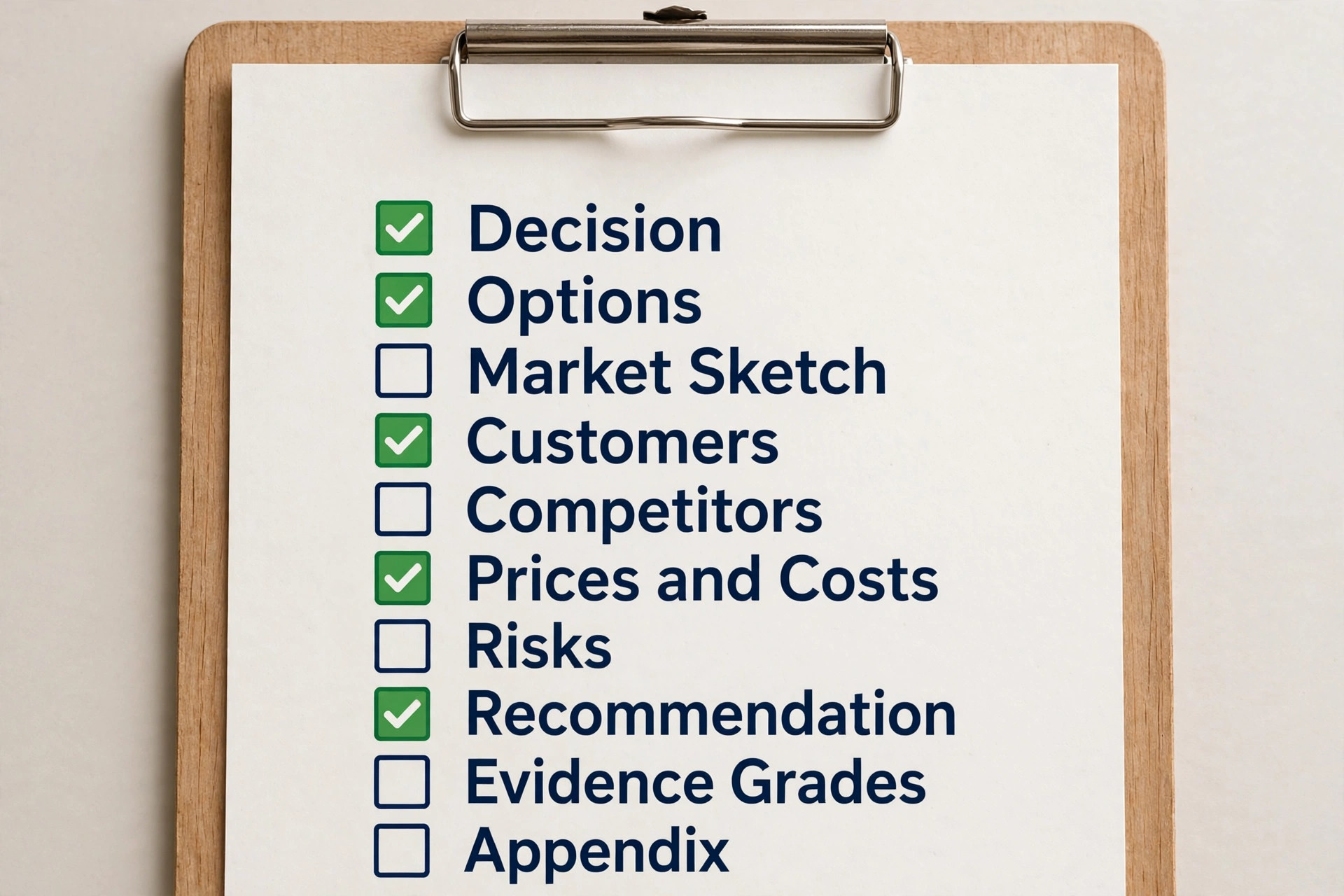
A template removes the temptation to improvise the structure on every project, and it makes briefs comparable across decisions. Copy the template below into a fresh document for each research task, and fill each field in short, plain sentences. If a field cannot be filled, write that it cannot be filled yet and name the test that would fill it, rather than leaving it blank or inventing an answer. If you use Perplexity for market research regularly, keep one filled template per market so briefs stay comparable.
Decision. One sentence stating the action, the date, and the market.
Options. The real options on the table, including the option to wait or to stay out.
Market sketch. Three to five sentences on size, growth, segments, and recent change, with dates and sources.
Customers. Who buys, what problem they are solving, and what they say in their own words, with at least three short quotes and source links.
Competitors. A table of no more than eight rivals, with price, target customer, strengths, complaints, and latest move.
Prices and costs. The realistic total cost for a typical buyer, plus the evidence for willingness to pay at each end of your proposed range.
Risks and failure modes. The top five risks, the evidence for each, and the test that would reduce it.
Recommendation. One paragraph stating what you recommend, what would change your mind, and the single next action with an owner and a date.
Evidence grades. A list of pile one claims with a grade of confirmed, indicative, or unproven, plus the source link for each.
Appendix. Every source you kept, grouped by market, competitor, customer, and price, with the date you accessed it.
A brief built from this template also ages well. When you revisit a market in six months, update the sketch, refresh prices, and regrade claims, without redoing customer listening from scratch. Over a year, those updated briefs reveal patterns, such as which price points buyers resist.
What Perplexity Costs and How to Choose Your Setup
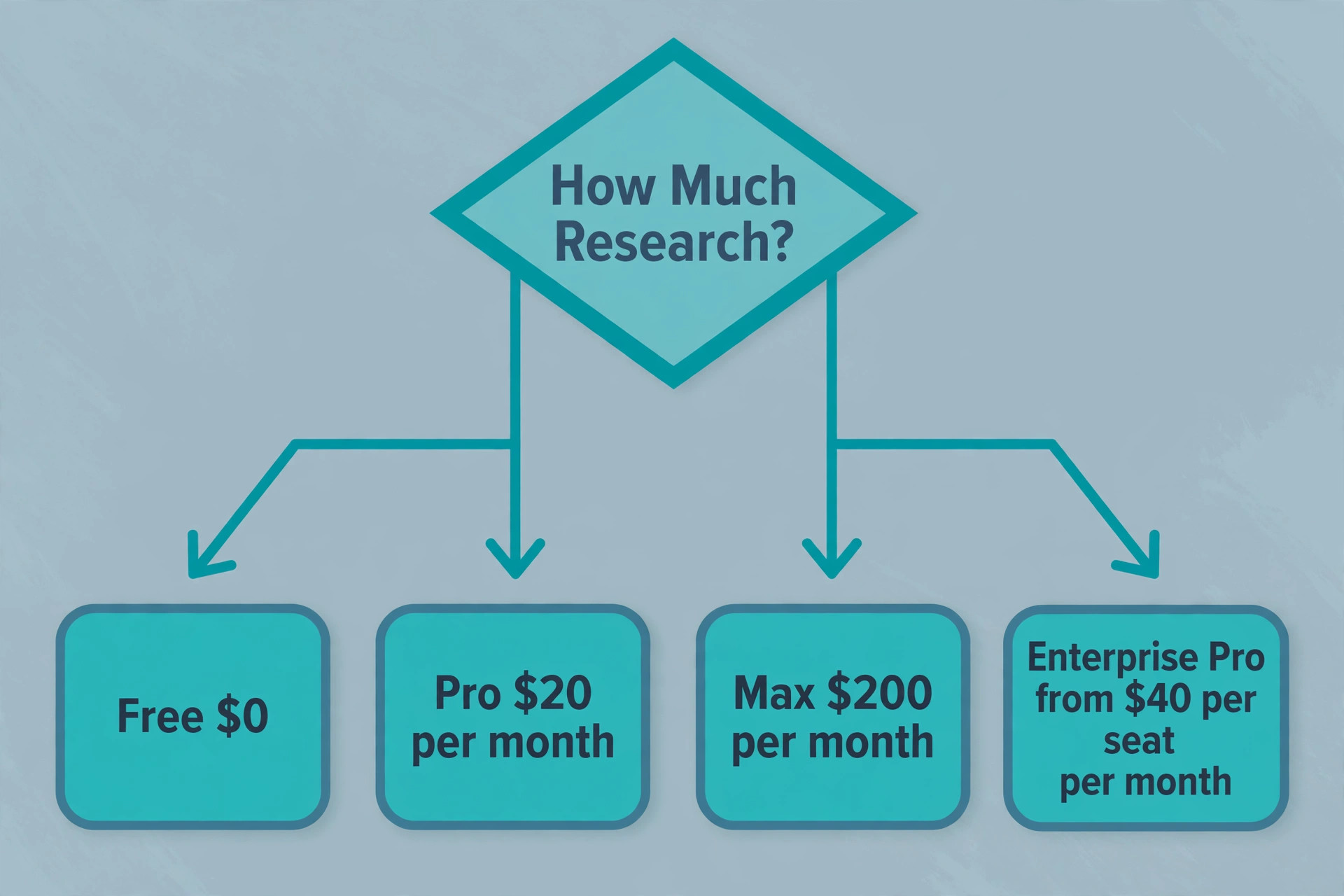
Prices change, so check the official Perplexity pricing page and checkout before you pay, and treat the figures below as a snapshot from October 2026 research, not as a quote. The free tier costs nothing and suits occasional research, with cited answers on basic models and a small daily allowance of Pro searches. It is enough to test this workflow, but not enough for a week of sustained research, because deeper research runs and file uploads are limited.
Perplexity Pro is listed at 20 dollars a month on monthly billing, or 200 dollars a year when paid annually, which works out to about 17 dollars a month as shown on the annual billing display. That plan is the natural fit for most people doing regular market research. It raises search and research limits substantially, adds model choice, file uploads, and the deeper research mode that handles multi step questions better than a single search. Perplexity Max is listed at 200 dollars a month, or 2000 dollars a year, and suits heavy users who run research constantly. Most small tasks do not need Max. Education Pro is listed at 10 dollars a month for verified students and educators.
Enterprise plans are listed from 40 dollars per seat a month for Enterprise Pro.
| Plan | Listed price in October 2026 research | Best fit for market research |
|---|---|---|
| Free | 0 dollars | Trying the workflow, occasional questions |
| Pro | 20 dollars a month, or 200 dollars a year | Regular briefs, deeper research, file uploads |
| Education Pro | 10 dollars a month with verification | Students and educators doing regular research |
| Max | 200 dollars a month, or 2000 dollars a year | Heavy daily research and agent heavy work |
| Enterprise Pro | From 40 dollars per seat a month | Teams needing admin and data controls |
Choose by counting your research load, not by the feature list. Start free and run this workflow for one real decision, noting where you hit a limit. If the free tier carried you through without friction, you do not need to pay yet. If you hit limits in pass two or pass three, or you needed file uploads, Pro is the next step. If you hit limits every day, or you need team sharing and admin controls, look at Max or Enterprise, and trial the higher tier for a single project before committing for a year. That test is the practical way to use Perplexity for market research without overspending on a tier you do not need.
For the official figures behind the table above, see the Perplexity pricing and cost overview at Perplexity, and confirm the current price at checkout.
Mistakes That Ruin AI Market Research
The first mistake is asking one broad question and stopping. A single prompt returns a tidy summary, not research, and it hides disagreement, old figures, and weak sources. Run the passes separately, and let each pass ask a narrower question than the one before it. The second mistake is copying prices, features, or market sizes without opening the source. An answer engine can lag behind a pricing change, blend two years into one figure, or repeat a marketing claim as fact. Open pile one sources every time. The third mistake is treating many copies of one claim as many confirmations. Identical wording across pages usually means one original copied many times.
Count it once, and find a genuinely independent second source. Many of these mistakes happen when someone tries to use Perplexity for market research with a single prompt instead of passes.
The fourth mistake is researching the product instead of the buyer. A feature table tells you what rivals built. Reviews tell you what buyers wanted, what frustrated them, and what they would pay to fix. Skip pass four and your brief will sound informed while missing the demand it was meant to measure. The fifth mistake is skipping the argument against your own case. If you never ask what would prove you wrong, the first real test will do the arguing for you, at far higher cost. The sixth mistake is ending with a document instead of a decision. A brief without a recommendation, a next action, an owner, and a date is a folder entry, not research.
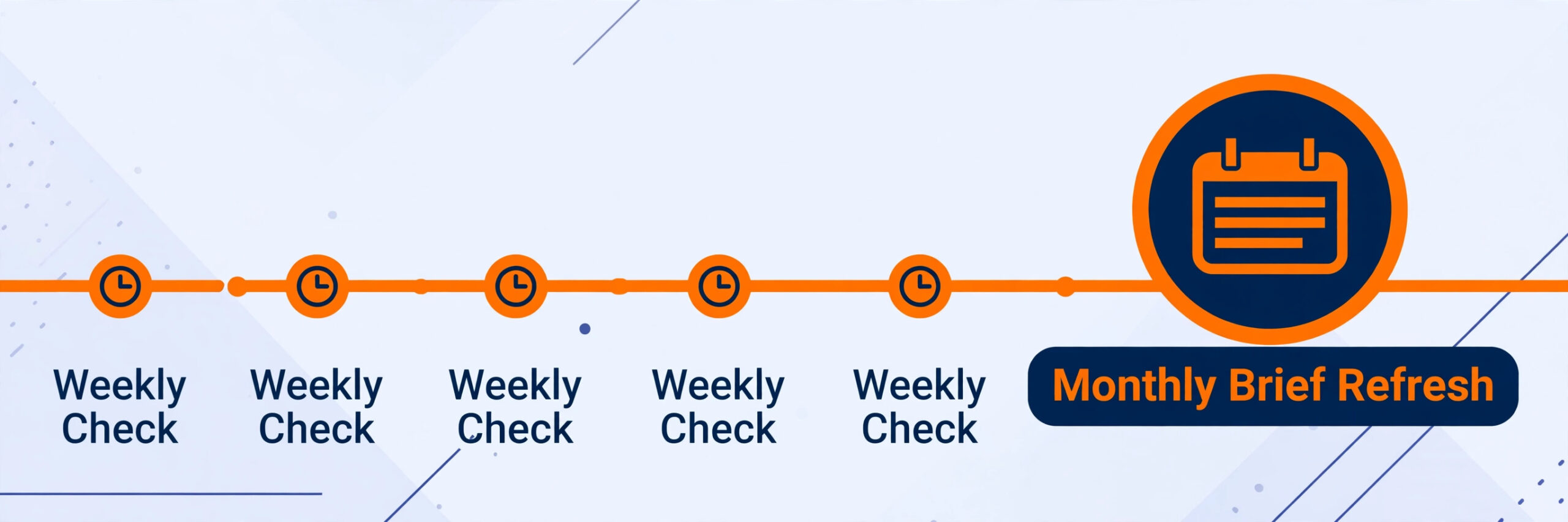
Keep a weekly rhythm to prevent them creeping back. Run a short competitor and price check weekly, and refresh the full brief monthly for live decisions.
For related reading, best AI research tools puts Perplexity in the wider research field, Perplexity alternatives covers what to try if you need a different search style, ChatGPT vs Perplexity compares answer engines head to head, and how to do keyword research with AI pairs well with pass four, because search demand and customer language often point the same way.
Frequently Asked Questions
Can Perplexity replace traditional market research?
No, it replaces the gathering stage, not the judging stage. It finds current sources and cited summaries far faster than manual tab hopping, but you must still check pile one claims, read original sources, and test willingness to pay with real buyer conversations or a small campaign. Keep the accountability yourself.
Is the free tier enough to use Perplexity for market research?
For one small decision, yes. The free tier is enough to test the seven pass workflow, map a market, and profile a few competitors. For weekly briefs, deeper research runs, or file uploads, you will hit limits, and Pro at 20 dollars a month is the usual next step. Start free, count where you hit friction, and upgrade only when a limit blocks a real pass.
How do I check whether a Perplexity market figure is true?
Open the cited source, read around the quote, and check the date, the definition, and the independence of the source. Then find a second source that does not depend on the first, such as a filing rather than another article quoting the same press release. Grade the claim as confirmed, indicative, or unproven, and report the range when sources disagree.
What should a market research brief contain?
A decision sentence, the options on the table, a market sketch with dates and sources, customer evidence in buyers own words, a competitor table, realistic prices and willingness to pay evidence, the top five risks with a test for each, a recommendation, a next action with an owner and a date, and graded evidence with source links. Anything that does not bear on the decision belongs in the appendix, not the main brief.
How long should a Perplexity market research session take?
About ninety minutes for a small decision, with ten to twenty minutes per pass, plus fifteen minutes for source checking. A larger decision, such as entering a new market, can take an hour per pass. If a session takes under thirty minutes, you probably asked one broad question and copied the answer, which is the habit this workflow is designed to break.
What are the biggest limits of AI market research?
It can only report what is published, so private prices, churn, and unit sales for private companies stay hidden. It can repeat a wrong number that many weak sources share, blend figures from different years, and summarise paywalled reports from secondary pages. Your source checking workflow, your customer reading, and your tests against real buyers are the safeguards against all three limits.
Let One Decision Prove the Workflow
The habit to take from this guide is not a prompt. It is a sequence. Define one decision, map the market, profile the rivals that matter, listen to buyers in their own words, test prices against real willingness to pay, argue against your own case, and write a brief that ends with a named next action. Perplexity makes each step faster, and the source checking workflow makes each step trustworthy. That is the standard to hold when you use Perplexity for market research on a live decision.
Start this week with a decision you already face, not a practice topic. Run the seven passes, fill the brief template, and grade every load bearing claim before you share it. If the brief changes your next action, the workflow has paid for itself.