
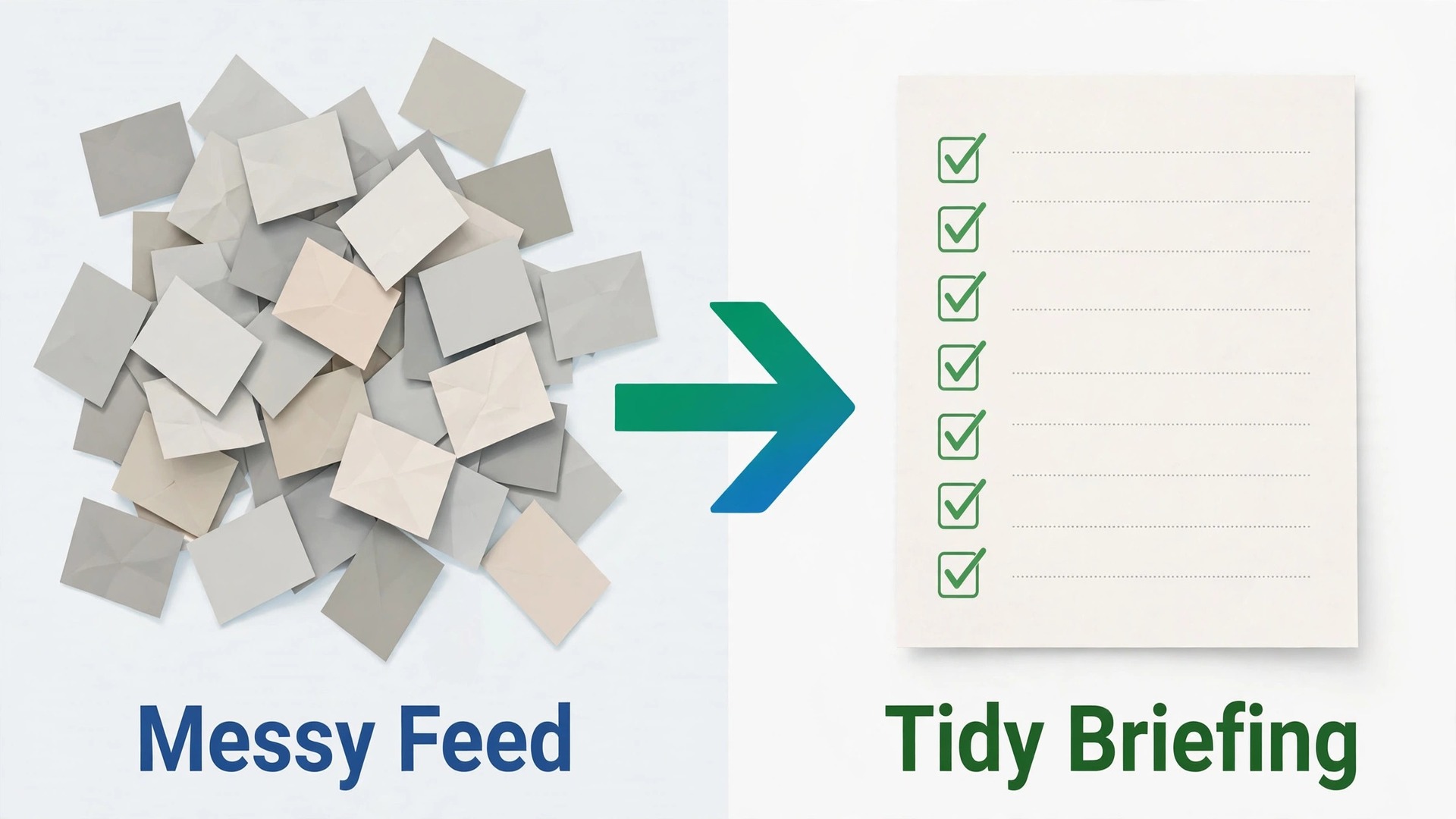
A reader today can scroll past more headlines before breakfast than a newspaper reader met in a full week a generation ago, yet very little of that flood ever gets checked twice. Most of it is skimmed, reacted to, and forgotten, and the stories that stick are often the ones with the sharpest headline rather than the strongest evidence. If you want to use Perplexity for news research daily and actually end the day better informed than you started it, you need a system that separates what happened from what is merely claimed, and that takes less time than the scrolling it replaces.
This guide builds that system. You will set up a fifteen minute morning briefing, learn how to judge the sources behind an answer, cross check claims across outlets, follow a story over days instead of reacting to single headlines, and save sources you can cite later. It also covers the part most guides skip, which is how AI summaries go wrong and how to catch the error before you repeat it to a colleague or post it online.
Why a Daily News Habit Needs a System, Not More Feeds
The problem with news today is not scarcity. It is that the supply of headlines has grown far faster than any reader’s time or attention, and the feeds that deliver them are tuned for engagement rather than accuracy. A breaking story arrives as a push alert, then as a thread of reactions, then as a set of opinion pieces, and by evening the original facts are buried under commentary about the commentary. Readers who rely on feeds alone tend to remember the loudest version of a story, not the most verified one.
A research habit fixes this by changing the order of operations. Instead of starting with whatever the feed pushed at you, you start with a question. What happened, who reported it first, what do independent outlets agree on, and what is still unconfirmed. Perplexity suits that order because it answers in prose with citations, so every claim can be traced to a page you can open. That traceability is the whole point. A summary without sources is just another opinion, while a summary with sources is a starting point you can verify.
The habit also protects you from a quieter failure, which is reading a lot about a few loud stories and nothing about the slow ones that matter more. A daily briefing with fixed beats, such as your industry, your city, and one topic you follow long term, keeps the agenda yours rather than the algorithm’s. Fifteen focused minutes with a checklist beats an hour of drifting through feeds, and it leaves a record you can return to when a story develops.
How to Use Perplexity for News Research Daily
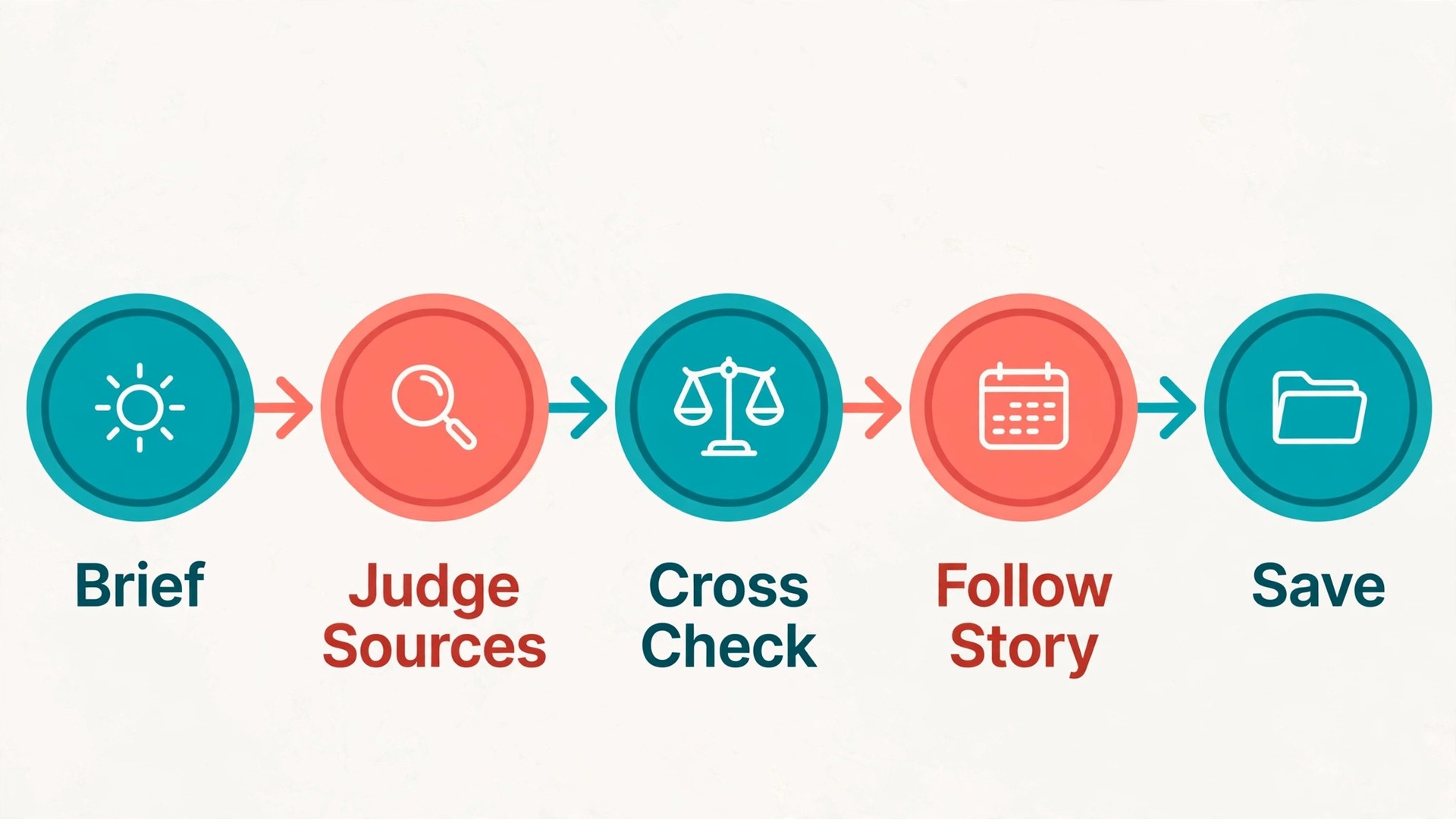
The workflow in this guide has five parts, and they run in the same order every morning. First, you brief yourself on what is new. Second, you judge the sources behind the answers. Third, you cross check the claims that matter. Fourth, you update any story you are following. Fifth, you save what is worth keeping. The order matters because each step filters the next one. There is no point cross checking a claim from a source you would not trust anyway, and no point saving a story you have not yet verified.
Start with a single Perplexity thread per beat rather than a dozen scattered questions. A thread keeps context, so follow up questions build on earlier answers instead of starting from zero. Name the thread for the beat and the date, for example “Energy policy, week of October 26”, so you can find it again. Within a thread, ask narrow questions. A question such as “What did the central bank announce today about interest rates, and what did it say about inflation” will produce a more checkable answer than “What is happening in the economy”, which invites a vague summary stitched from unrelated stories.
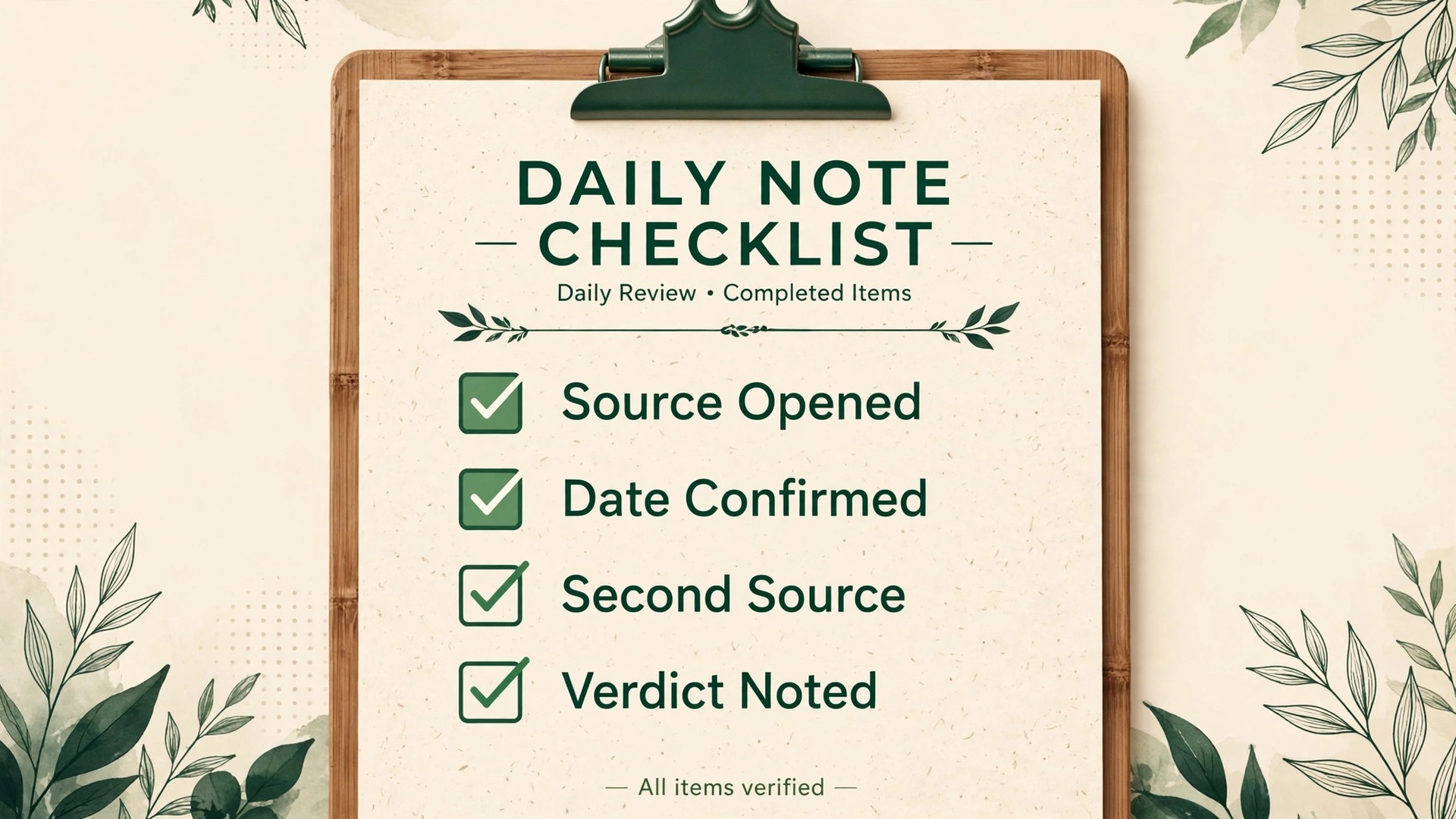
Keep a daily note beside the thread, even a short one. For each story, record the headline fact, the strongest source, the date, and one line on what is still unconfirmed. That note is what turns a morning of reading into research. Without it, you will re-read the same stories tomorrow and mistake familiarity for understanding.
The Fifteen Minute Morning Briefing Setup
A briefing that takes longer than fifteen minutes will not survive a busy week, so the setup has to be tight. If you use Perplexity for news research daily, the same order each morning is what makes the habit stick. Do it the same way each morning, and protect the order. The steps below assume you open Perplexity once and work through three beats. Adjust the beats to your life, but keep the count at three. More beats means skimming, and skimming is what the system is meant to replace.
- Open yesterday’s note and list the stories you are already following. If a story has developed, it goes first, because a follow up question is faster than a fresh search and keeps the thread intact.
- Ask for the newest development on each beat, with a date in the question. A date in the prompt, such as “as of today, October 25”, pushes the answer toward current reporting rather than background.
- Read the answer for facts first and skip the commentary. Note the claims that would change a decision you might make, and mark those as the claims to check.
- Open the two strongest citations for each story that matters. A citation to a wire service, a national newspaper, or an official statement carries more weight than a citation to an aggregator repeating the same report.
- Write the daily note. One line per story, with the fact, the source, the date, and what is unconfirmed. Close the thread and move on.
The briefing works best when the beats are chosen in advance. A useful default set is one beat for your work, one for your country or city, and one long term topic you care about, such as climate policy, artificial intelligence regulation, or a market you invest in. Rotate the third beat monthly if it goes quiet, but do not add a fourth beat until the three beat version runs smoothly for two weeks.
Timing helps. A morning briefing works because it sets the agenda before feeds do. If mornings are impossible, pick a fixed slot after lunch and keep it fixed. The habit survives on regularity, not on the hour.
Reading Sources Like an Editor
Perplexity answers look polished, which makes it easy to forget that the quality of an answer is set by the quality of its sources. An editor reading a draft asks who wrote it, who published it, when it was published, and what the writer could actually know. Ask the same four questions of every citation that matters, and most weak answers expose themselves quickly.
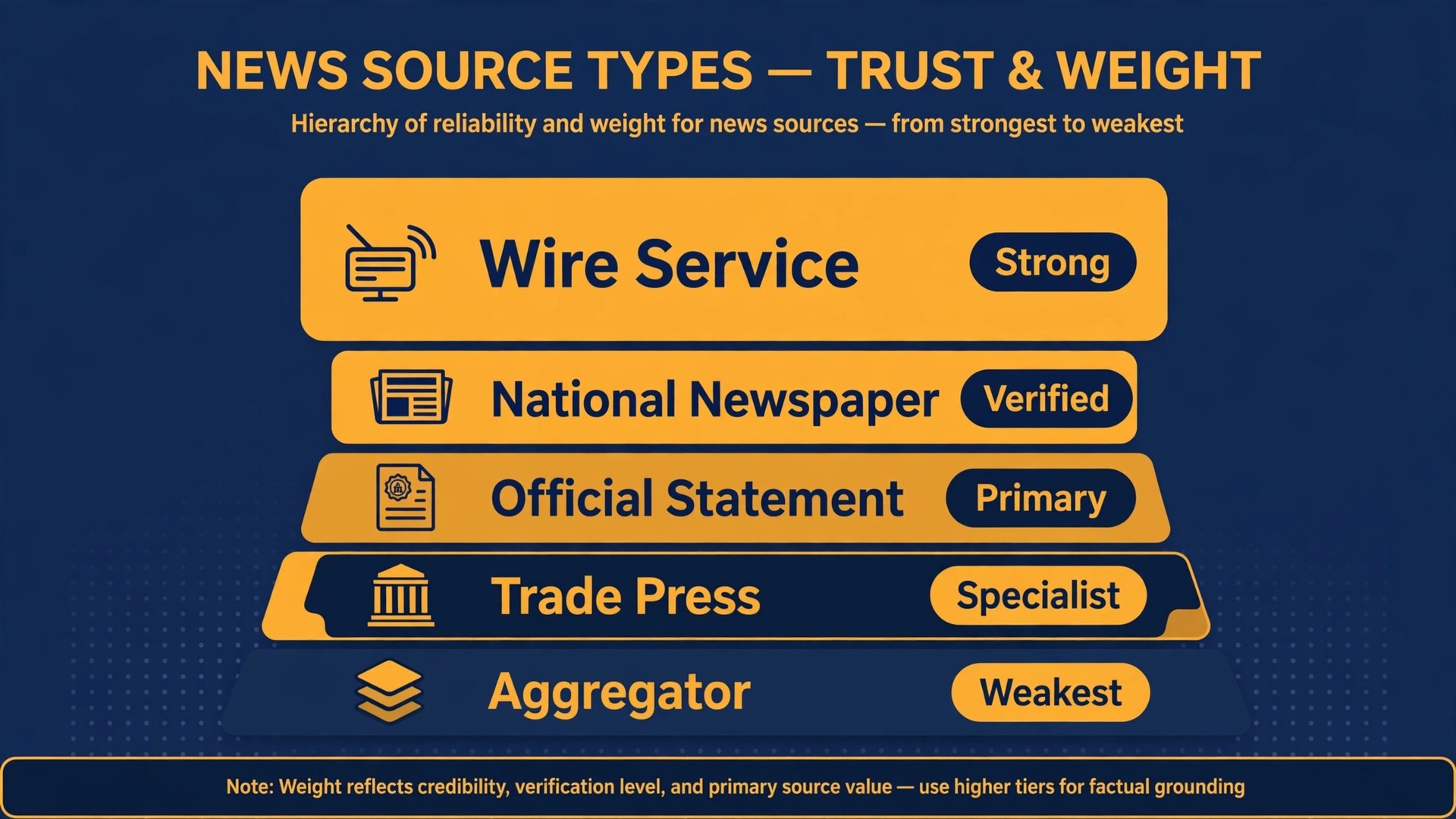
Start with the publisher. Wire services and established national newspapers have reporting staff on the ground, editors, and corrections policies, which makes them stronger for breaking facts. Specialist trade publications are strong inside their field and weaker outside it. Aggregators and commentary sites are useful for finding a story, but they are not a second source when they repeat the same report. Official statements, court filings, and company announcements are primary sources for what an institution said or did, but they are also self interested, so read them as a claim from a party with a stake, not as neutral confirmation.
Then check the date and the depth. A page published months ago can still appear in an answer about a current story, especially when the story has a long background. Check whether the cited page covers the new development or only the background. A source that predates the event cannot confirm the event, no matter how authoritative the publisher is. Also check whether the page is reporting or opinion. Opinion pieces often state facts in passing without the reporting behind them, and an AI summary can flatten that distinction, presenting an opinion writer’s claim as if it were reported.
The table below gives a quick way to sort sources during a briefing. It is a habit aid, not a verdict on any single outlet, and a strong outlet can still publish a weak story.
| Source type | Strong for | Watch out for |
|---|---|---|
| Wire service report | Breaking facts, quotes, timelines | Early versions may lack context |
| National newspaper | Verified reporting, context | Paywalls can limit what the summary saw |
| Official statement or filing | What an institution said or filed | Self interested framing |
| Specialist trade press | Technical detail inside its field | Narrow view outside its field |
| Aggregator or commentary site | Finding stories fast | Repeats one report without new reporting |
| Social media post | What people are saying | Rumour, old clips, and mislabelled video |
When you use Perplexity for news research daily, make this sorting a reflex. Open the citation, note the publisher and the date, and only then decide how much weight the claim deserves.
Cross Checking Claims Across Outlets
A claim that appears in one outlet is a report. A claim that appears in two independent outlets with their own reporting is much closer to a fact. This is the step that most rewards you when you use Perplexity for news research daily, because it turns a summary into something you can rely on, and it takes far less time than most readers expect when it is done with a fixed method.
Start by separating the claim from the commentary around it. A story usually contains one load bearing claim, such as a number, a decision, or an event, plus a cloud of interpretation. Write the load bearing claim down in one sentence. Then ask Perplexity a narrower question aimed at that claim alone, and name the outlets you want compared, for example by asking how two named newspapers reported the same announcement. If the outlets agree on the core fact but differ on interpretation, you have a solid fact and a legitimate debate about what it means. If they disagree on the core fact itself, you have a story that is still developing, and your note should say so plainly.
Pay attention to independence. Two articles that quote the same press release, the same unnamed official, or the same wire report are not two confirmations. They are one source told twice. Genuine independence looks like different reporters, different documents, or different data. A court filing plus a newspaper report is stronger than two newspaper reports quoting the same filing, and a company statement plus an independent analyst is stronger than two articles quoting the company.
Numbers deserve their own check. When an answer cites a figure, open the source and confirm the number, the unit, and the period it covers. A jobs figure for one month is not a jobs trend, a quarterly revenue figure is not annual revenue, and a poll of one thousand people is not a national consensus. Also confirm the date of the figure. Summaries sometimes pair a current headline with a figure from an older report, and the mismatch only shows when you open the page.
Finally, check what is missing. If every outlet you find repeats the same single source, say so in your note. A claim with one origin is not false, but it is fragile, and fragile claims should not travel further in your writing or your conversations without a warning attached.
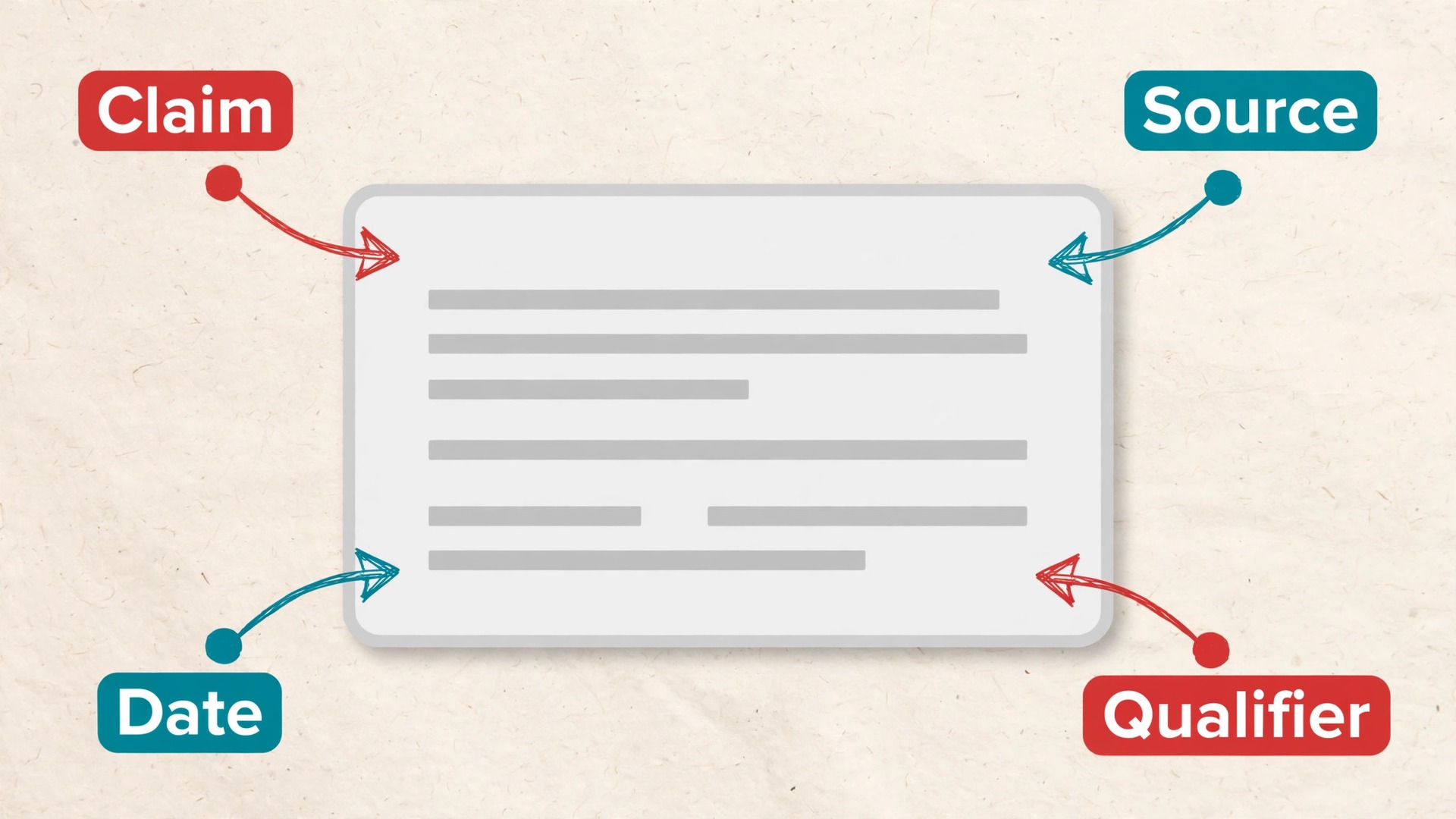
The Source Checking Checklist
This checklist is the overview proof element of the system, the part a quick summary cannot replace. Run it on every story you plan to share, cite at work, or act on. For casual reading you can skip it, but never skip it for a claim you will repeat.
- Claim written in one sentence, stripped of adjectives and interpretation.
- Original source opened, not just the summary, with publisher and date noted.
- Source type sorted, wire, newspaper, official document, trade press, or aggregator, with weight assigned accordingly.
- Date confirmed, the cited page covers the new development rather than background only.
- Reporting separated from opinion, and opinion claims flagged as opinion.
- Second independent source found, with different reporting or documents behind it, not a repeat of the same release.
- Numbers checked for value, unit, period, and date, with the surrounding paragraph read.
- Conflicts noted, including where outlets disagree on the core fact and what is still unconfirmed.
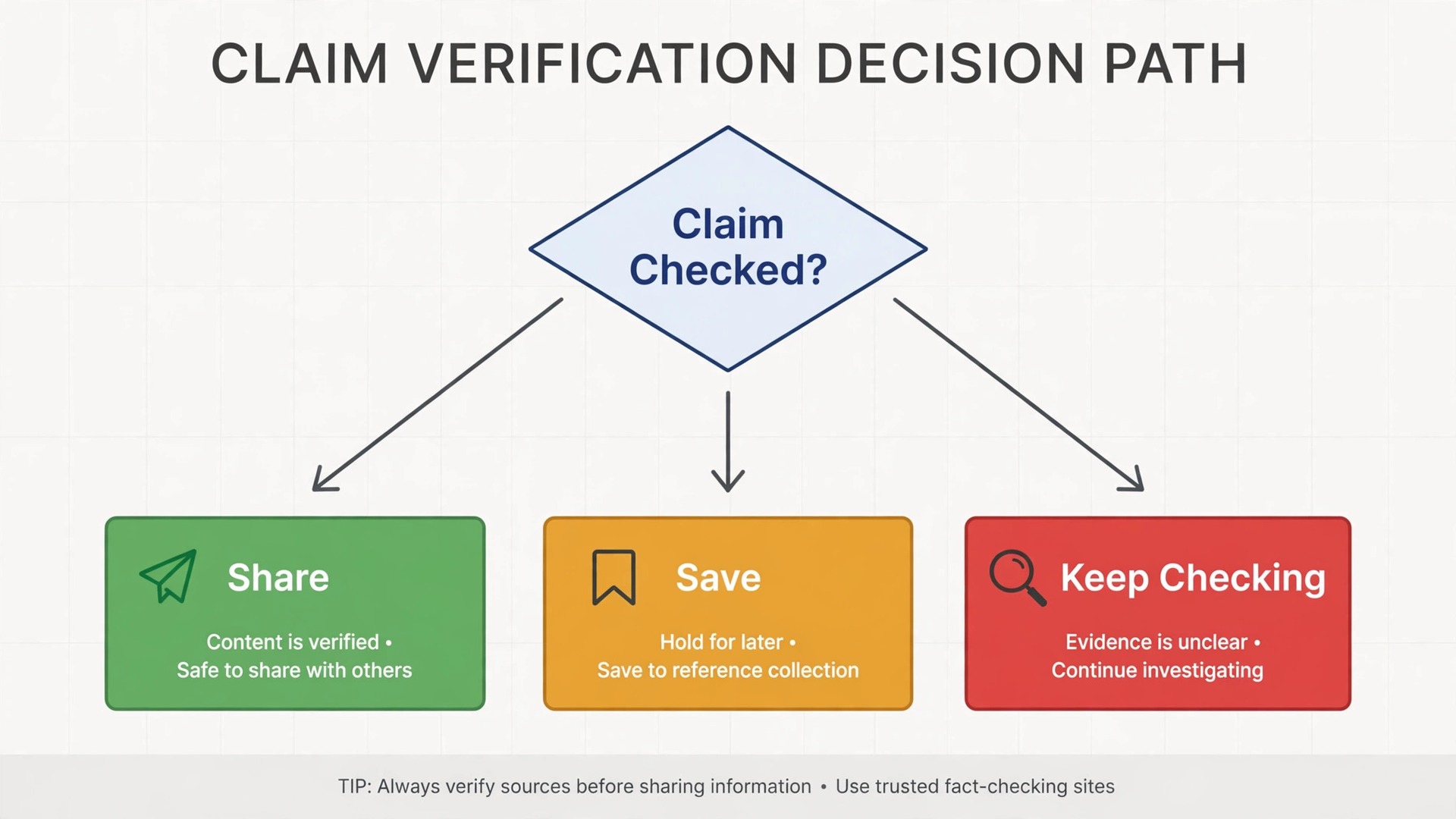
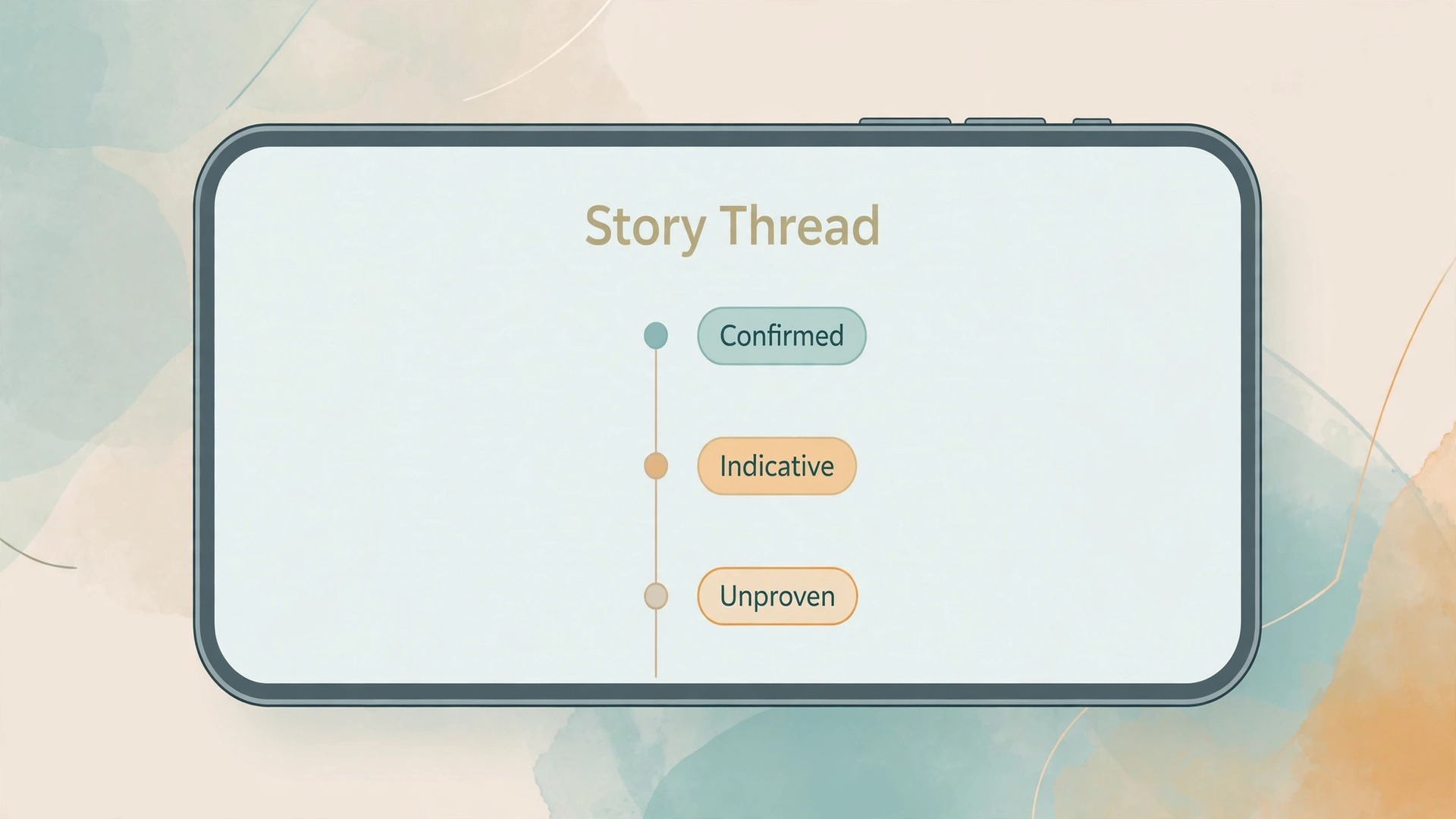
- Verdict recorded in the daily note as confirmed, indicative, or unproven, with the source links beside it.
The three verdict grades keep the system honest. Confirmed means two independent sources agree and you opened both. Indicative means one credible source supports the claim, or sources agree on part of it but disagree on detail. Unproven means the claim rests on a single weak source, a social post, or a page you could not open. Copy those grades into your note. A reader who sees “indicative” beside a figure knows to treat it carefully, and that warning is worth more than a confident sentence built on thin evidence.
Following a Story Over Days
Single headlines mislead because most important stories are not events, they are processes. A policy moves through announcement, reaction, amendment, and implementation. A court case moves through filing, hearing, ruling, and appeal. A company story moves through rumour, announcement, results, and market reaction. Reading only the first headline gives you the announcement and none of the rest, which is why following a story over days matters more than reading more stories.
Keep one Perplexity thread per long running story, and return to it rather than starting fresh each day. Ask what has changed since your last check, and name the date of that check in the question. This continuity is one of the quiet benefits when you use Perplexity for news research daily, because the thread remembers the story while you remember the verdict. This focuses the answer on new developments instead of repeating background you already know. When the story changes direction, update your note with a short timeline, one line per development with a date and a source. A timeline is the simplest defence against the common error of treating an old headline as current news.
Watch for three moments that deserve a fresh check. The first is a reversal, when an outlet corrects or updates an earlier report. The second is a new primary document, such as a published ruling, a filing, or an official dataset, which can replace a chain of secondary reporting. The third is a shift in consensus, when outlets that disagreed start to agree, or the reverse. Each of these moments is a good reason to run the source checking checklist again, because the evidence base has changed.
Also set a stopping rule. A story that has not developed in two weeks can move from the daily briefing to a weekly check. This keeps the briefing short and stops stale stories from crowding out new ones. When the story revives, it returns to the daily list with its timeline intact.
Saving and Citing Sources for Later Use
Research that is not saved is research you will repeat. A daily habit produces dozens of sources a month, and without a saving routine the useful ones vanish into closed tabs. Perplexity threads help because they preserve the question, the answer, and the citations together, but a thread is not a filing system. Build a simple one beside it.
For each story worth keeping, save three things. First, the source links themselves, with the publisher and date, in your daily note or a notes app. Second, a one sentence summary in your own words, because a summary you wrote is easier to trust later than a summary you copied. Third, the verdict grade from the checklist, so future you knows whether the claim was confirmed or merely indicative. When you later write about the story, cite the original source, not the Perplexity answer. The answer engine is a finding aid. The source is the evidence.
Citing well also matters for sharing. If you pass a story to colleagues, include the strongest source link and the date, and flag anything unconfirmed. That single habit raises the quality of every conversation the story enters, because the next reader starts from evidence rather than from a headline. If you publish or post about a story, the same rule applies with more force. Link the original reporting, name the outlet, and note where outlets disagree rather than smoothing the disagreement away.
Over months, saved notes become a personal archive. A timeline of a policy, a set of sources on a market, or a record of how a story was first reported and later corrected is genuinely useful work, and it is the kind of material that a one paragraph summary can never reproduce.
Avoiding AI Summary Errors
AI summaries fail in specific, repeatable ways, and knowing the patterns makes them easy to spot. The most common failure is blending, where details from two different events, dates, or people merge into one smooth sentence. A summary might attach last year’s figure to this year’s event, or attribute a quote from one official to another. The sentence reads well, which is exactly why it is dangerous. The defence is to check numbers, names, and dates against the cited source, and to distrust any sentence that combines several facts without a citation.
The second failure is overconfidence about unconfirmed reports. Breaking stories often rest on a single unnamed source or a social media clip, and a summary can present that as established fact by dropping the qualifiers. Watch for words that signal certainty where the source is careful. If the cited page says “reportedly” or “according to sources” and the summary drops those words, the summary has upgraded a rumour into a fact. Restore the qualifier in your note.
The third failure is flattening disagreement. When outlets disagree, a summary sometimes picks the majority view and presents it as settled, or averages two numbers into a figure nobody published. Your cross checking step catches this, because you will see the disagreement in the sources themselves. When you find it, record the range and the reason for it rather than a single number.
The fourth failure is stale sourcing. An answer can cite a page that was accurate when published but has since been corrected or superseded. Check the date, and for fast moving stories, check whether the cited outlet has published an update or a correction. A correction notice at the top of a page changes the status of everything below it.
The fifth failure is misreading a source type. A summary can treat an opinion piece, a press release, or a sponsored post as straight reporting. Open the page and check the label, the author, and the publication section before you rely on the claim. When you use Perplexity for news research daily, this five pattern check takes about two minutes per important story, and it catches most errors before they leave your desk.
Free or Pro for a Daily News Habit
Cost matters for a habit you plan to keep for months, so choose the tier by counting your actual use rather than by the feature list. Perplexity offers a free tier with unlimited basic searches and a small number of Pro searches each day, which is enough to test this workflow for a week or two. Pro costs 20 dollars a month, or 200 dollars a year when billed annually, and adds many more Pro searches, model choice, and higher limits for deeper research runs. Max sits at 200 dollars a month for power users who need the highest limits. Prices and limits change over time, so confirm the current figures on the Perplexity pricing page before you pay.
For most daily news readers, the decision is simple. Start free and run the briefing for two weeks, noting where you hit a limit. If the free tier carried you through without friction, you do not need to pay yet. If you hit Pro search limits during the briefing, or you want deeper research runs on a developing story, Pro is the next step. Max is for professionals running many deep research tasks a day, and it is more than a news habit needs. Avoid paying for a year until the monthly plan has survived a full month of real mornings, because a habit that looks good in week one sometimes fades in week three.
Mistakes That Ruin a Daily News Habit
The first mistake is starting from the feed instead of from a question. A feed gives you the loudest stories, while a question gives you the stories that bear on your work and your interests. Keep the beats fixed and let the feed wait until the briefing is done.
The second mistake is trusting a summary without opening a source. Citations only help if you click them, and the claims that matter most are the ones most worth opening. A briefing where no citation was opened is not research. It is reading with extra steps.
The third mistake is treating agreement across aggregators as confirmation. Ten sites repeating one wire report are one source, not ten. Count independent reporting, not copies.
The fourth mistake is saving headlines instead of evidence. A bookmark folder full of headlines without dates, sources, or verdict grades will not help you a month later. Save the source, the date, and the grade, or do not save it at all.
The fifth mistake is letting the habit sprawl. A briefing that grows to forty minutes will be skipped on busy days, and a skipped day becomes a skipped week. Protect the fifteen minute limit, keep three beats, and move quiet stories to a weekly check. The readers who keep the habit are the ones who use Perplexity for news research daily in the same short format, not the ones who build the longest briefing.
**Related reading.** For a wider view of the tool, ChatGPT vs Perplexity compares answer engines head to head, best AI research tools places Perplexity among other research options, and use Perplexity for market research workflow applies a similar cited workflow to market decisions, which pairs well with the daily briefing habit described here.
Frequently Asked Questions
Can Perplexity replace reading the news directly?
No, it changes the order of reading rather than replacing it. Perplexity finds current reporting and summarises it with citations, but the reporting itself is the evidence. Use the briefing to choose what to read, then open the strongest sources for the stories that matter. A reader who never opens a source is trusting a summary, not doing research.
How long should a daily news briefing take?
Fifteen minutes for three beats is a realistic target once the habit is set. That covers a check on followed stories, a question per beat, opening the strongest citations, and writing the daily note. Longer briefings tend to collapse on busy days, so protect the limit and move quiet stories to a weekly check rather than adding minutes.
Is the free tier enough to use Perplexity for news research daily?
For most readers, yes at first. The free tier covers basic searches and a small number of Pro searches each day, which is enough to run the briefing and test the workflow for two weeks. Upgrade to Pro at 20 dollars a month only when a limit actually blocks a briefing step, and confirm current prices and limits on the Perplexity pricing page before paying.
How do I know whether a Perplexity news summary is accurate?
Open the citations and check four things, which are the publisher, the date, whether the page is reporting or opinion, and whether the summary kept the qualifiers from the source. Then find a second independent source for any claim you plan to share or act on. A claim that survives that check, with a verdict grade in your note, is one you can rely on.
What should I do when outlets disagree about a story?
Record the disagreement instead of picking a winner. Note what each outlet reports, what source each one relies on, and whether the disagreement is about the core fact or about interpretation. If the core fact is disputed, mark the claim indicative or unproven in your note and check again when a primary document or a second independent report appears.
Can I cite Perplexity itself as a source?
Cite the original reporting, not the answer engine. Perplexity is a finding aid that points to sources. When you write, share, or present a story, link the outlet that reported it, name the publisher and the date, and note where sources disagree. That practice keeps your work checkable by the next reader.
Make Tomorrow’s Briefing Sharper Than Today’s
The habit in this guide is deliberately small. Three beats, fifteen minutes, one note, and a checklist for the claims that matter. It does not ask you to read more news. It asks you to read the right news, check it, and keep a record, so that each morning starts from yesterday’s verified note instead of from a fresh flood of headlines. Run it for two weeks and judge it by one test, which is whether you can explain what happened on your beats, name the source for each fact, and say what is still unconfirmed.
When you use Perplexity for news research daily in that disciplined way, the tool stops being another feed and becomes a research desk you can trust.